


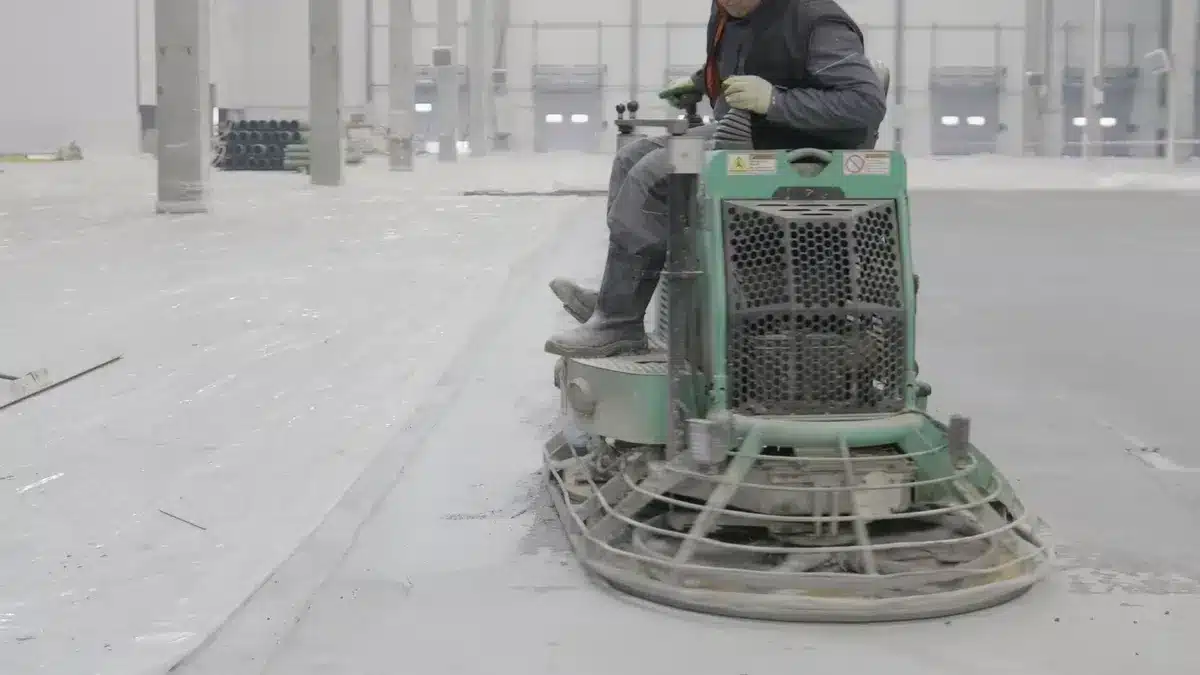
Concrete densifiers play a crucial role in enhancing the durability of your warehouse floors. By minimizing porosity and increasing strength, these products ensure long-lasting performance. When comparing options, consider factors such as effectiveness, application methods, and environmental impact to select the best warehouse concrete densifier for your needs.
Key Takeaways
Concrete densifiers enhance the durability of warehouse floors by reducing porosity and increasing strength, leading to long-lasting performance.
Silicate-based densifiers improve surface hardness and reduce dust, while lithium-based options penetrate quickly and lower maintenance costs.
Choosing the right densifier can significantly impact the longevity and appearance of your floors, making informed decisions essential for optimal results.
Types of Densifiers

Silicate-Based
Silicate-based densifiers are popular for their effectiveness in enhancing concrete durability. They chemically react with calcium hydroxide in the concrete, forming calcium silicate hydrate (C-S-H). This reaction increases the density and strength of the surface. Here are some key benefits of silicate-based densifiers:
Benefit | Description |
|---|---|
Silicate-based densifiers chemically harden the surface, enhancing durability. | |
Reduced Dusting | They minimize dusting, which is beneficial for maintenance in various settings. |
Enhanced Stain Resistance | These densifiers improve stain resistance, making surfaces easier to clean. |
Polished Finish | They provide a polished finish, which is aesthetically pleasing and functional. |
Lithium-Based
Lithium-based densifiers offer rapid penetration and are ideal for quick applications. Their smaller molecular size allows them to penetrate up to 50% faster than sodium or potassium alternatives. This feature makes them a favorite for projects requiring minimal downtime. Here’s a comparison of lithium-based densifiers:
Advantage/Disadvantage | Description |
|---|---|
Faster penetration | Lithium silicate densifiers penetrate up to 50% faster than sodium or potassium alternatives. |
Treated polished concrete floors can reduce long-term maintenance costs by around 70%. | |
Increased durability | Densifiers enhance surface density and hardness, boosting compressive strength by up to 2000 psi. |
Cost-effective | Application costs range from $0.10 to $0.20 per square foot, making them economical for large areas. |
Other Types
In addition to silicate and lithium-based options, other types of densifiers exist. Sodium and potassium-based densifiers are common alternatives. Sodium silicate is often more economical for larger areas, while potassium silicate is suitable for environmentally friendly projects.
Type | Description |
|---|---|
Lithium | |
Sodium | More economical for larger areas. |
Potassium | Suitable for environmentally friendly projects. |
Choosing the right warehouse concrete densifier can significantly impact the longevity and performance of your warehouse floors.
Mechanisms of Action
How Densifiers Work
Concrete densifiers enhance the durability of your warehouse floors by minimizing porosity and increasing strength. When you apply a densifier, it penetrates the concrete surface and reacts with the calcium hydroxide present in the cement paste. This reaction produces calcium silicate hydrate (C-S-H), which fills the pores and hardens the wear layer. As a result, you achieve structural reinforcement for the slab’s surface.
Professional-grade densifiers react with the calcium hydroxide in the cement paste to produce calcium silicate hydrate. This fills the pores and hardens the wear layer, providing structural reinforcement to the slab’s surface.
Chemical Reactions
The chemical reactions that occur when you apply densifiers to concrete surfaces are crucial for enhancing strength and durability. Here are the key reactions involved:
Densifiers penetrate concrete and react with free lime (calcium hydroxide) to form calcium silicate hydrate (C-S-H) gel.
This gel fills voids in the concrete, enhancing its strength and durability.
The reaction produces byproducts like sodium carbonate, lithium carbonate, or potassium carbonate, which do not affect surface characteristics.
Additionally, all densifiers are silicate compounds that change the surface characteristics of concrete. The reaction with free calcium carbonate creates a crystalline structure that increases surface strength. By understanding these mechanisms, you can make informed decisions about the best densifier for your warehouse needs.
Benefits of Warehouse Concrete Densifiers
Increased Strength
Using a warehouse concrete densifier significantly enhances the strength of your concrete floors. When you apply these products, they penetrate deeply and react with the concrete’s components, forming calcium silicate hydrate (C-S-H). This process fills voids and strengthens the surface, resulting in a more durable floor.
Improved Compressive Strength: Densifiers can increase compressive strength by up to 2000 psi, making your floors more resilient to heavy loads.
Enhanced Abrasion Resistance: Densified surfaces show remarkable improvements in abrasion resistance. For instance, products like Duro-Nox demonstrate increases in abrasion resistance of up to 500% within just 15 minutes of application.
Product | Increase in Abrasion Resistance (15 min) | Increase in Abrasion Resistance (30 min) |
|---|---|---|
Duro-Nox | 500% | 145% |
Duro-Nox LS | 300% | 145% |
Duro-Nox LSC | 200% | 90% |
Improved Resistance
Concrete densifiers also provide enhanced resistance to various environmental factors. They create a denser surface that withstands wear and tear, moisture, and chemical spills.
Moisture Resistance: Densifiers reduce the porosity of concrete, making it less susceptible to water damage. This feature is crucial in warehouses where spills are common.
Chemical Resistance: The hardened surface resists damage from chemicals, oils, and other substances, ensuring that your floors maintain their integrity over time.
Aesthetic Enhancement
Beyond durability, warehouse concrete densifiers improve the aesthetic appeal of your floors. They create a polished finish that enhances the overall look of your warehouse.
Increased Gloss Levels: Densifiers enhance the gloss of concrete, leading to higher light reflectivity. This improvement contributes to brighter warehouse interiors, which can reduce energy costs associated with lighting.
Long-Term Appearance: Densifiers fill microscopic voids in the concrete, making it denser and more resistant to wear. This results in a professional appearance that lasts over time.
By choosing the right warehouse concrete densifier, you not only enhance the durability of your floors but also improve their visual appeal and functionality.
Densifier Comparison
Performance Metrics
When evaluating warehouse concrete densifiers, you should consider several key performance metrics. These metrics help you determine which densifier will best meet your needs. Here’s a table summarizing the essential metrics:
Metric | Description |
|---|---|
Durability | Resistance to wear and tear over time, ensuring long-lasting performance. |
Maintenance | Ease of upkeep and reduced need for repairs, contributing to cost savings. |
Operational Efficiency | Impact on workflow and productivity, including equipment performance. |
Abrasion Resistance | Ability to withstand surface wear, enhancing longevity of the flooring. |
Surface Hardness | Increased hardness leading to better performance under heavy loads. |
Slip Resistance | Safety feature reducing workplace accidents, crucial for operational safety. |
By focusing on these metrics, you can make an informed decision about which warehouse concrete densifier will provide the best performance for your specific application.
Cost-Effectiveness
Cost-effectiveness is another critical factor when comparing densifiers. The average cost for applying concrete sealers, including densifiers, typically ranges from $1.50 to $5.00 per square foot. Among these options, densifiers stand out as one of the most economical choices. They require less extensive preparation and are simpler to apply compared to other sealing systems.
When considering long-term costs, lithium-based densifiers often provide a significant advantage. Here’s a comparison of the cost-effectiveness of different densifier types over a 10-year period:
Densifier Type | Long-term Durability | Maintenance Requirements | |
|---|---|---|---|
Sodium Silicate | 30-40% | Moderate | Higher |
Lithium-based Densifier | N/A | High | Lower |
Choosing a lithium-based densifier can lead to lower maintenance costs and higher durability, making it a smart investment for your warehouse flooring.
Application Methods
The application method you choose can significantly impact the effectiveness of the densifier. Different types of densifiers have specific application requirements. Here’s a table outlining the recommended application methods for various densifiers:
Densifier Type | Recommended Application Method |
|---|---|
Sodium Silicate | Flood the floor for a minimum of 30 minutes until it rejects additional material. Suitable for large warehouse applications. |
Potassium Silicate | Recommended for architectural floors that are gray or integrally colored and are to be chemically polished. |
Lithium Silicate | Apply with minimal agitation, saturate until rejection, and remove excess unless using metal bond diamonds. |
Colloidal Silica | Ensure no contamination on the surface, follow manufacturer’s directions carefully to avoid overapplication. |
Understanding these application methods will help you achieve the best results with your chosen warehouse concrete densifier.
Tip: Always follow the manufacturer’s instructions for application to ensure optimal performance and longevity of your concrete surface.
Common Concerns
Environmental Impact
You may wonder about the environmental implications of using concrete densifiers. Fortunately, many densifiers are designed to be non-toxic and sustainable. Here are some key points to consider:
Concrete densifiers enhance durability without introducing harmful substances.
Polished concrete utilizes existing substrates, which reduces waste.
The reflective nature of polished concrete improves lighting efficiency, conserving energy.
Polished concrete is one of the most eco-friendly flooring options available. It revitalizes worn floors, extending their lifespan while minimizing environmental impact.
Compatibility
Compatibility issues can arise when applying densifiers to existing concrete floors. To ensure effectiveness, consider the following:
Densifiers must penetrate concrete pores, so existing coatings or sealers should be removed before application.
Some densifiers may create a surface that is too smooth for good adhesion with subsequent coatings, such as epoxy.
Addressing these compatibility concerns will help you achieve optimal results with your densifier.
Maintenance Needs
Maintaining densified concrete floors is straightforward. Regular upkeep ensures longevity and performance. Here’s a summary of typical maintenance tasks:
Maintenance Task | Frequency |
|---|---|
Dust mopping | Daily |
Wet mopping with clean water | As necessary |
Annual cleaning | Annually |
Reapplying stain guard | Annually |
Burnishing | Annually |
Densified floors require minimal maintenance compared to untreated concrete. You will find that daily sweeping and occasional buffing suffice to keep your floors in excellent condition.
Selecting the right concrete densifier is crucial for maximizing the durability of your warehouse floors. Consider factors such as abrasion resistance, chemical resistance, and temperature stability. Here are some key points to remember:
Densifiers: Silicate-based options enhance surface hardness and reduce dust.
Advantages: They offer permanent protection and require minimal maintenance.
Best Use: Ideal for areas with heavy traffic and forklift use.
By making informed choices, you can ensure long-lasting performance for your concrete surfaces.
FAQ
What is a concrete densifier?
A concrete densifier is a chemical product that penetrates concrete surfaces, enhancing strength and durability by reducing porosity.
How often should I apply a densifier?
You should apply a densifier during initial installation and consider reapplication every 3 to 5 years for optimal performance.
Are densifiers environmentally friendly?
Yes, many densifiers, like BANDě Concrete Densifier, are eco-friendly and non-toxic, making them safe for use in various settings.
See Also
Selecting The Ideal Concrete Densifier For Your Warehouse Flooring
A Complete Guide To Buying Concrete Densifiers And Hardeners
Understanding The Key Differences Between Densifiers And Hardeners
BANDe’s Ultimate 2025 Guide For Selecting Polished Concrete Densifiers
Defining Concrete Densifiers And Their Functionality Explained
