

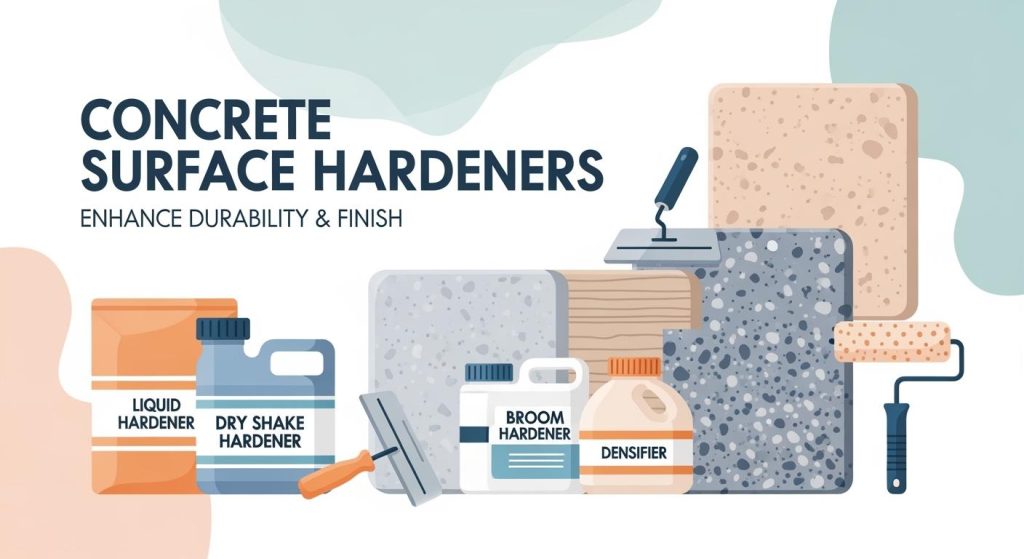
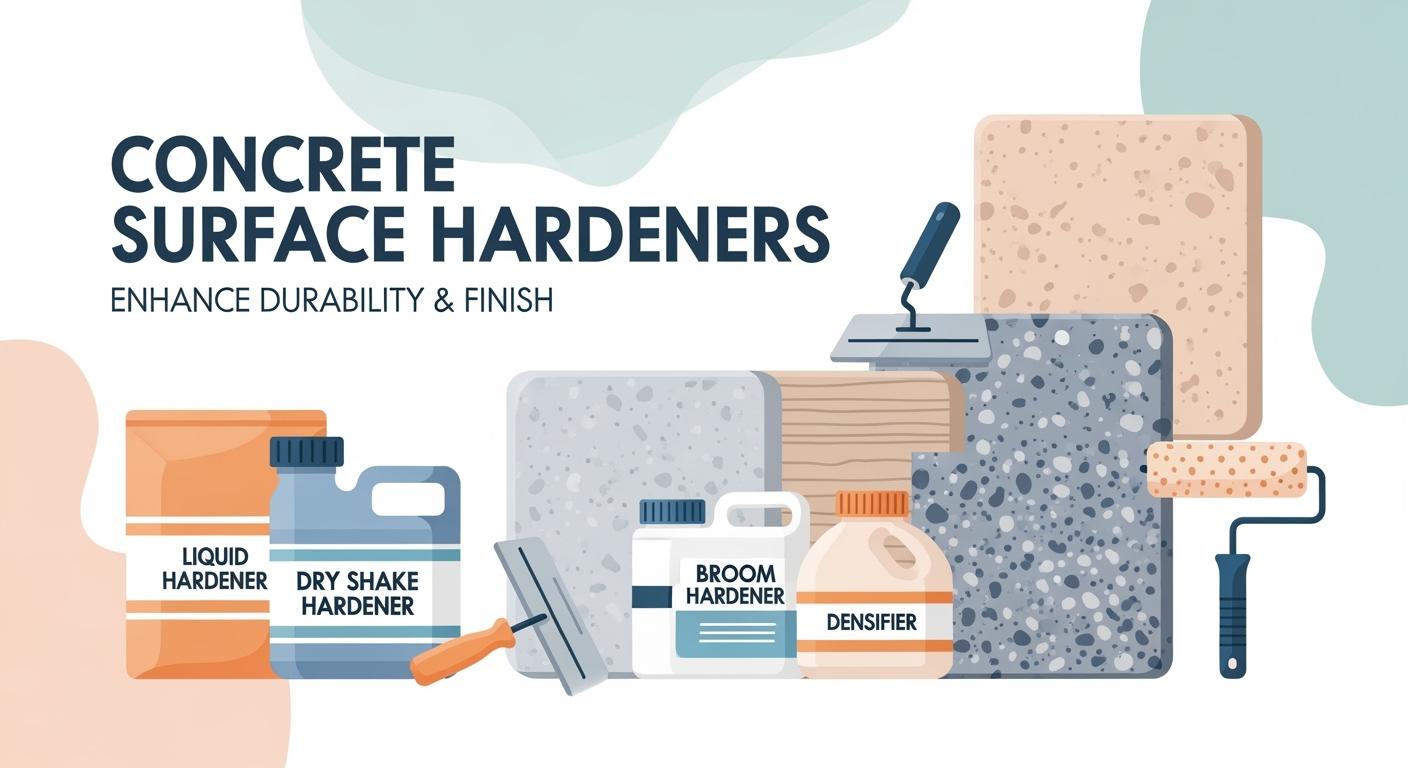
Concrete surface hardeners play a crucial role in enhancing the durability of concrete surfaces. They help strengthen the material, making it more resistant to wear and tear. With the global market for concrete surface hardeners valued at several billion dollars and projected to grow significantly, understanding the different types available becomes essential. This knowledge allows for better application in various projects, ensuring long-lasting and resilient surfaces.
Key Takeaways
Concrete surface hardeners improve durability, making surfaces last 20-30 years longer than untreated concrete.
Using hardeners can reduce maintenance costs by minimizing repairs and preventing issues like dusting.
Different types of hardeners, like admixtures and dry shake hardeners, serve specific purposes and enhance concrete’s strength and appearance.
Concrete Hardener Types
Concrete hardeners come in various forms, each designed for specific applications and performance characteristics. Understanding these types helps in selecting the right product for your project.
Admixtures
Admixtures are liquid hardeners added to concrete before or during mixing. They enhance the concrete’s properties from within. These hardeners typically contain chemicals that react with the concrete components, improving density and strength.
Application Method: Admixtures are applied to cured concrete, often sprayed or mopped onto the surface. This method allows them to penetrate and densify the concrete.
Performance: They primarily improve abrasion resistance and create a more durable surface. However, their effects are mostly superficial compared to other hardeners.
Aspect | Admixtures (Liquid Hardener) | Surface Hardeners (Dry Shake) |
|---|---|---|
Application Method | Applied to cured concrete, typically sprayed or mopped | Applied to fresh, wet concrete, broadcasted and troweled |
Performance | Densifies surface, improves abrasion resistance, mostly superficial | Integrates into the concrete, offers superior abrasion and impact resistance |
Timing | No specific timing required with concrete pouring | Requires precise timing during concrete pouring |
Dry Shake Hardeners
Dry shake hardeners are a popular choice for enhancing the surface of freshly poured concrete. They consist of a dry powder that is broadcasted over the wet concrete and then troweled in. This method ensures that the hardener becomes an integral part of the concrete surface.
Materials Used: Common materials in dry shake hardeners include natural aggregates like quartz and metallic aggregates for added strength. For instance, Tycron is a non-metallic option, while Tycron Met offers high strength with metallic aggregates.
Material Type | Description |
|---|---|
Natural Aggregate | Quartz aggregate surface hardeners to improve abrasion resistance. |
Metallic Aggregate | Iron aggregate surface hardeners to improve abrasion resistance. |
Non-Oxidizing Metallic Aggregate | Non-oxidizing metallic aggregate surface hardeners to improve abrasion resistance. |
The application process significantly affects the final surface hardness. When applied correctly, dry shake hardeners create a tough and durable surface. They react with the free water in the concrete, forming a hard layer that enhances overall strength.
Liquid Chemical Hardeners
Liquid chemical hardeners are another effective option for improving concrete surfaces. These products, such as LIQUI-HARD ULTRA, primarily contain lithium silicate. This ingredient penetrates the concrete and reacts with its components, increasing surface strength at a molecular level.
How They Work: Liquid hardeners fill the pores in the concrete, preventing weak spots and enhancing durability. They form crystals that improve density and resistance to abrasion.
Component | Interaction Description | Benefit |
|---|---|---|
Lithium Silicate | Penetrates evenly into concrete, reacts with portland cement and calcium hydroxide. | Fills empty pores, prevents weak spots. |
Sodium Silicate | Larger molecules may lead to inconsistent reactions. | Can create variable surface strength. |
General Reaction | Forms crystals that fill pores, enhancing density and resistance to abrasion. | Reduces dusting and improves durability. |
Benefits of Concrete Surface Hardeners
Concrete surface hardeners offer numerous advantages that significantly enhance the performance and longevity of concrete surfaces. Understanding these benefits can help you make informed decisions for your projects.
Enhanced Durability
One of the primary benefits of using concrete surface hardeners is their ability to improve durability. These products increase the lifespan of concrete by making it more resistant to wear and tear. Here are some key points to consider:
Increased Hardness: Surface hardeners can boost the hardness of concrete by 30-40%. This improvement means that treated surfaces withstand heavy foot traffic and machinery better than untreated ones.
Extended Service Life: With proper application, concrete surfaces can last 20-30 years longer than untreated concrete, which typically lasts only 5-10 years.
Reduced Maintenance Costs: By enhancing durability, hardeners lead to lower maintenance expenses. They minimize the need for repairs and replacements, as fewer issues arise over time. For instance, hardeners reduce dusting, which can spoil products and equipment, further lowering maintenance costs.
Improved Aesthetics
Concrete surface hardeners also contribute to the visual appeal of concrete surfaces. They allow for a variety of finishes and colors, transforming plain concrete into attractive features. Here are some aesthetic benefits:
Color Options: Many hardeners come in a range of colors, allowing for vibrant finishes that go beyond standard grey concrete. This variety enables customization to fit different design styles.
Textural Variety: Hardener applications can create unique textures, adding depth and character to concrete surfaces. This flexibility allows for creative designs that enhance overall aesthetics.
Polished Finishes: Some hardeners enable polishing, which can mimic the look of marble. This not only enhances beauty but also makes surfaces easier to maintain.
Wear Resistance
Concrete surface hardeners significantly improve wear resistance, making them ideal for high-traffic areas. Here’s how they contribute to this essential quality:
Abrasion Resistance: Treated surfaces exhibit up to 40% greater resistance to wear and tear compared to untreated concrete. This feature is crucial in environments where heavy machinery or foot traffic is common.
Chemical Resistance: Hardeners create a dense surface that resists damage from spills of oils, acids, and other harsh chemicals. This protection is vital for maintaining the integrity of concrete in industrial settings.
Longevity: By providing a tougher surface, hardeners help concrete last longer. They protect against impacts and chemical spills, ultimately extending the lifespan of the concrete and reducing maintenance costs.
Choosing the right concrete surface hardener is vital for project success. Consider factors like durability, aesthetics, and service conditions. Here are some best practices to keep in mind:
Avoid for ultraflat floors: Dry shake hardeners may not suit these applications.
Focus on durability: Ensure the hardener meets your project’s abrasion resistance needs.
By following these guidelines, you can enhance the longevity and performance of your concrete surfaces. 🏗️
FAQ
What are concrete densifiers?
Concrete densifiers are materials that enhance the density and strength of concrete surfaces, making them more durable and resistant to wear.
How do I apply a densifier?
To apply a densifier, simply spray or mop it onto the concrete surface after curing. Ensure even coverage for best results.
Can I use hardeners on outdoor concrete?
Yes, you can use hardeners on outdoor concrete. They improve durability and protect against weathering and wear.
See Also
A Comprehensive 2025 Guide to Choosing Concrete Floor Hardeners
The Ultimate Buying Guide for Concrete Densifiers and Hardeners
Understanding the Functionality of Concrete Surface Hardeners
