

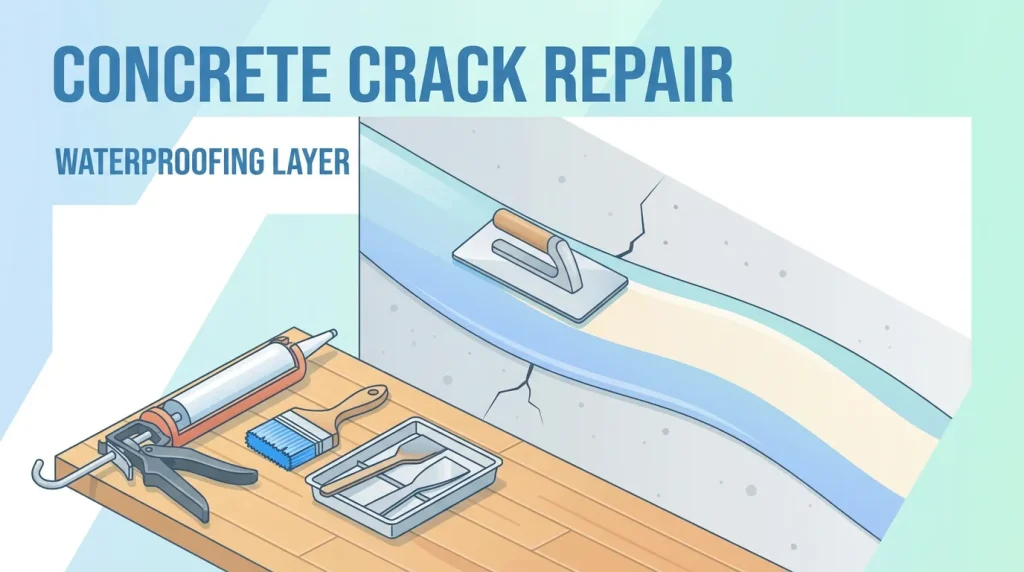
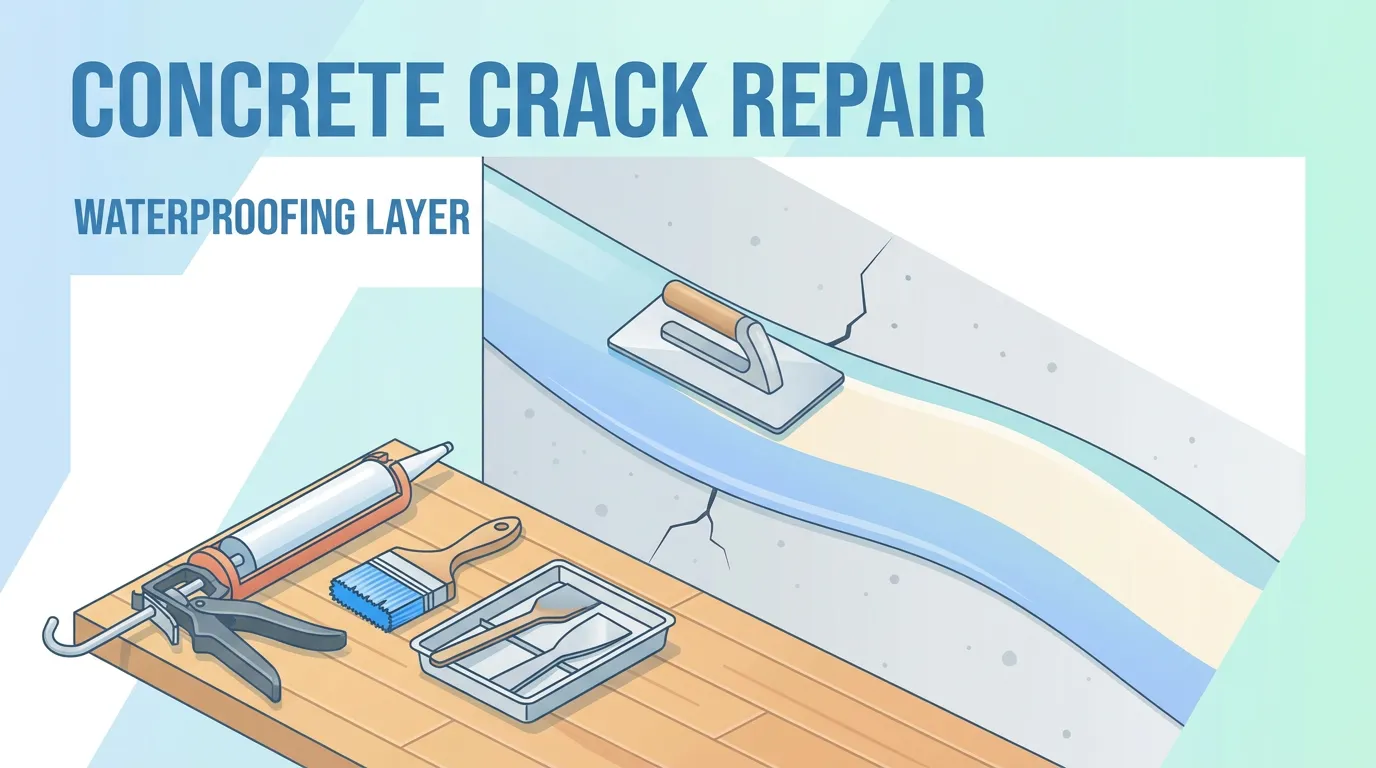
Proper concrete repair and waterproofing ensure structural integrity and longevity. Selecting the correct waterproofing method demands a systematic approach. You must accurately assess the problem for your project. This process involves diagnosing issues, understanding available repair options, and considering specific factors. You will know when to seek professional help, perhaps for a concrete repair waterproof coating solution.
Key Takeaways
Diagnose concrete cracks and surface damage early to choose the best repair method for your structure.
Select the right waterproofing system based on environmental exposure, slope drainage, and moisture levels.
Hire experienced professionals for severe structural damage or complex below-grade waterproofing projects.
Diagnosing Concrete Problems: Key to Lasting Solutions
Identifying Common Concrete Issues and Their Causes
You must first accurately identify the specific problems affecting your concrete structures. Common issues include various types of cracks. Thin vertical cracks, often less than 1/4 inch, may indicate natural settling. Stair-step or diagonal cracks frequently appear in block walls, signaling soil movement or pressure changes. Horizontal cracks are more serious; they typically result from lateral pressure due to water or weak soil. Other critical signs include bulging or bowed walls, where the wall curves inward from external pressure. You might also notice sticky windows and doors, or cracked drywall and gaps between the floor and baseboards, which are indirect signs of foundation movement.
Beyond cracking, you often encounter concrete spalling, especially on parking garage decks. Water penetration leading to rebar corrosion is a primary cause. Freeze-thaw cycles, chloride intrusion from de-icing salts, and poor drainage contribute significantly to this damage. Original construction issues, such as an improper mix or inadequate cover, also play a role. Surface scaling, an early sign of freeze-thaw damage, occurs when the top layer of concrete flakes away. This exposes inner layers to more moisture and other elements, compromising durability. Deicing salts increase concrete saturation, raising the risk of frost damage and promoting further scaling. Effective waterproofing is crucial to prevent these issues.
Assessing Damage Extent and Severity
After identifying the problem, you need to assess the damage’s extent and severity. This step determines the appropriate repair and waterproofing strategy. For instance, you must evaluate the environmental conditions surrounding buried structures. Soil pH is a critical environmental parameter. It measures hydrogen ion concentration, determining if a subsurface environment is acidic or alkaline. This directly impacts the corrosion potential for buried steel or concrete structures. You compare these results to published guidelines to evaluate corrosion potential.
You can use non-destructive testing methods to assess internal damage, such as rebar corrosion. Ground-penetrating radar (GPR) effectively detects corrosive environments, though it might overestimate corroded areas when deterioration is low. Combining GPR with other methods, like half-cell potential, provides a more reliable condition assessment. The half-cell potential test measures the potential difference between the rebar and a reference electrode. Readings more negative than -350 mV indicate a high probability of active corrosion. No single non-destructive testing method can detect active corrosion, delamination, and vertical cracking simultaneously. Therefore, you need a combination of techniques for accurate determination of rebar corrosion. This comprehensive assessment helps you understand the full scope of the problem, whether it is on a balcony, a deck, or another structure, and guides your choice of waterproofing and repair. This detailed evaluation prevents further moisture infiltration and ensures long-term maintenance.
Concrete Repair and Waterproofing Solutions
Repair Techniques for Various Concrete Damages
You have various repair techniques available for concrete damage. These include crack injection, patching, and structural reinforcement. For instance, you can use crack injection to seal fine cracks, preventing further moisture infiltration. Patching involves replacing deteriorated concrete sections. When you perform patching, consider using polymer-modified mortar. Plain cement mortar bonds poorly to old concrete and cracks due to differential shrinkage. Polymer modification addresses these issues. Polymer-modified mortar forms a secondary polymeric film at the bond line, integrating with the cement hydration structure. This improves wetting of the substrate surface, enhancing mechanical and chemical bond compared to cement paste alone. For more severe structural issues, you might consider carbon fiber reinforced polymer (CFRP) wrapping. You need CFRP wrapping when the axial compression ratio cannot meet seismic design code requirements, especially for plastic hinge zones under seismic loads. It increases shear and axial strength, improving ductility and energy dissipation behavior. This is particularly useful for cylindrical or small-section rectangular columns.
New technologies also offer advanced solutions. Researchers are investigating Basilisk self-healing concrete for structural repair applications, particularly in accelerated bridge construction. This material aims to characterize rheology, mechanical properties, and durability. Other self-healing technologies include bacterial bioconcrete, where Bacillus bacteria produce calcium carbonate to seal fissures within 7–14 days. Microencapsulation involves capsules containing healing agents that rupture at crack sites, sealing them in hours. Vascular networks deliver healing agents continuously, enabling unlimited repair cycles. When selecting materials, remember ASTM C928 is the industry standard governing the performance of concrete repair materials in the United States. Regarding lifecycle costs, patching has the highest lifecycle cost among repair methods for infrastructure RC structures, while concrete overlay has the lowest. Frequent minor repairs reduce overall lifecycle cost by minimizing the need for major costly repairs for your project.
Choosing the Right Waterproofing System for Your Needs
Selecting the correct waterproofing system is crucial for long-term protection against moisture. You have several types of waterproofing systems. Surface-applied waterproofing includes membranes, coatings, and sealers. A concrete repair waterproof coating creates a protective layer on the surface. For waterproofing paint, you typically need at least two coats for efficacy to ensure a robust waterproof barrier. You can also use integral waterproofing, which involves admixtures added directly to the concrete mix. Drainage systems divert water away from the structure.
Consider the performance characteristics of different waterproofing solutions. Crystalline waterproofing admixtures resist physical damage because they have no surface to damage; they remain intact after casting. They also resist hydrostatic pressure from either direction. These admixtures can self-seal hairline cracks up to 0.4 mm over time. In contrast, a surface-applied bituminous membrane is vulnerable to puncture during backfilling or construction. It cannot self-heal; cracks require physical repair. For existing structures, crystalline admixtures are not usable as a primary system, only as coatings. Bituminous membranes are suitable for remediation, such as internal coatings or cavity drain membranes. For sealants, you differentiate between one-component and two-component systems. Silicone sealants generally provide a longer service life in exterior applications due to better UV and weather resistance. Polyurethane sealants age faster in exterior exposure. For a balcony or deck, choosing the right waterproofing system, such as a flexible waterproof membrane or waterproof coatings, is vital to prevent infiltration and ensure watertight leak coverage. This careful installation prevents future moisture problems on your balcony or deck.
Selecting the Right Solution and Professional Help
Key Factors for Optimal Solution Selection
You must carefully consider several critical factors when selecting the ideal concrete repair and waterproofing solution for your project. First, differentiate between above-grade and below-grade applications. Products for above-grade waterproofing must be breathable, UV-resistant, aesthetically pleasing, and adaptable to wide temperature ranges. In contrast, below-grade structures demand solutions that account for hydrostatic pressure, capillary action, and the water table. These factors significantly influence which waterproofing system works most effectively to protect against moisture infiltration.
Consider the overall surface area and the concrete’s age and current condition. Older concrete with extensive damage requires different approaches than newer, less compromised surfaces. Environmental exposure to water also plays a crucial role. For instance, coastal areas present unique challenges. Temperature extremes and thermal cycling accelerate material degradation. Concrete structures experience faster carbonation and chloride penetration under elevated temperatures. Thermal expansion-contraction cycles compromise joint integrity and protective coatings. Saltwater intrusion accelerates corrosion in reinforced concrete and steel by introducing chlorides. Repeated wetting cycles accelerate deterioration if waterproofing systems are insufficient. Standard epoxy systems are vulnerable to UV degradation, chalking, and losing their protective barrier characteristics. A concrete surface in the splash zone, not protected by a specifically engineered system, actively deteriorates, accumulating chloride contamination with every wet-dry cycle.
Designing for proper slope and drainage is paramount for effective waterproofing performance. The 2015 International Building Code (IBC) recommends a minimum of 1/4-inch per foot (approximately 2% slope) for drainage on surfaces like a balcony or deck. This ensures water moves away from the structure. Improper drainage design significantly impacts the long-term effectiveness of below-grade waterproofing membranes. Drainage layers help relieve hydrostatic head pressure and prolong membrane life. Proper design minimizes water reaching the membrane. Hydrostatic pressure forces water into any crack or imperfection, making waterproofing more difficult.
You must also assess water contaminants. In marine environments, high chloride concentrations, frequent wetting/drying, and oxygen availability make tidal and splash zones aggressive. Material selection for marine concrete repair must prioritize chloride resistance and durability under cyclical wetting and drying. Calcium aluminate cement (CAC)-based repair mortars offer better resistance to chloride penetration than Portland cement systems for these areas. Finally, determine the required durability for your project.
When to Hire a Professional for Concrete Projects
Knowing when to engage a professional for your concrete project is essential for successful and lasting results. Complex projects, especially those involving below-grade construction or significant structural repairs, often require expert knowledge. The total installation cost of a concrete waterproofing system is influenced by many factors. These include the type of waterproofing method (exterior is more expensive due to excavation), the size and accessibility of the basement, and the extent of existing water damage. You might need to repair cracks, mold, or structural issues first. The type of foundation material and local climate and soil conditions also add complexity.
Professionals can navigate these complexities, ensuring the correct waterproofing system is chosen and installed. They consider factors like the current condition of structural concrete, groundwater head, and access constraints for equipment. If your project involves active water ingress, significant concrete deterioration, or requires continuous dewatering due to a high groundwater table, professional expertise becomes invaluable. For a balcony or deck, ensuring proper waterproofing installation prevents future moisture problems and guarantees long-term maintenance. A professional ensures your project meets all requirements, providing peace of mind and protecting your investment.
You must prioritize a thorough diagnostic process and informed decision-making for concrete repair and waterproofing. Accurate assessment, understanding available solutions, considering your project’s specifics, and valuing professional expertise are key takeaways. This approach ensures long-term durability and peace of mind for your concrete structures, minimizing future maintenance and costly repair needs.
FAQ
What is the first step in any concrete repair project?
You must first accurately diagnose the specific concrete problems. This involves identifying common issues like cracks or spalling and assessing their extent and severity.
How do I choose the right waterproofing system for my project?
You select a system based on factors like above-grade versus below-grade application, the concrete’s age, and environmental exposure. Consider surface-applied, integral, or drainage systems.
When should I hire a professional for concrete repair or waterproofing?
You should hire a professional for complex projects, especially those involving below-grade construction, significant structural repairs, or active water ingress. They ensure proper installation and long-term success.
See Also
Choosing The Best Flexible Waterproof Sealant For Your Project
A Complete Comprehensive Guide To Effective Concrete Waterproofing Techniques
Selecting The Ideal Concrete Patching Compound For Any Repair
How To Find The Ideal Concrete Sealer For Projects
Essential Steps For Picking Top Quality Concrete Protective Sealers
