


When selecting abrasion resistant concrete floors for industrial use, epoxy-based coatings and polyaspartic coatings stand out. Choosing the right flooring is crucial for meeting your facility’s specific needs. Consider factors like durability, cost, maintenance, and performance to ensure you make the best decision.
Tip: High durability flooring can enhance the longevity and performance of your facility.
Key Takeaways
Choose the right flooring based on your facility’s needs. Consider durability, cost, and maintenance to make an informed decision.
Epoxy flooring offers excellent chemical resistance and durability, making it ideal for environments with heavy machinery and spills.
Urethane flooring excels in high-traffic areas due to its flexibility and impact resistance, providing long-lasting performance.
Epoxy Flooring
Properties of Epoxy
Epoxy flooring consists of a durable resin that forms a tough, resilient surface. This flooring can withstand heavy foot traffic, machinery, and impacts. Its rugged polymer structure enhances its durability, making it ideal for environments with high wear and tear. The chemical resistance of epoxy flooring protects against spills from oils, solvents, and other harsh substances. This feature is crucial in chemical-exposed environments where safety and cleanliness are priorities.
Advantages of Epoxy
Epoxy flooring offers numerous benefits for industrial facilities:
Abrasion Resistance: It withstands foot traffic, forklifts, and daily wear.
Chemical Resistance: It protects against chemicals, oils, and solvents.
Adhesion to Concrete: This ensures long-term durability and prevents delamination.
Aesthetic Options: You can choose from various colors and finishes to enhance your facility’s appearance.
Safety Features: Non-slip additives improve traction, reducing the risk of slips and falls.
These advantages make epoxy flooring a popular choice for manufacturing facilities, food processing plants, and warehouses.
Disadvantages of Epoxy
While epoxy flooring has many benefits, it also has some drawbacks:
Complex Installation: Proper surface preparation is essential. This includes cleaning and repairing imperfections.
Curing Time: The flooring can take several days to cure, during which the area remains unusable.
Comfort: Epoxy feels cold underfoot and lacks cushioning, which may be uncomfortable for prolonged standing.
Maintenance Requirements: Regular cleaning is necessary to maintain its appearance and longevity.
Cost of Epoxy
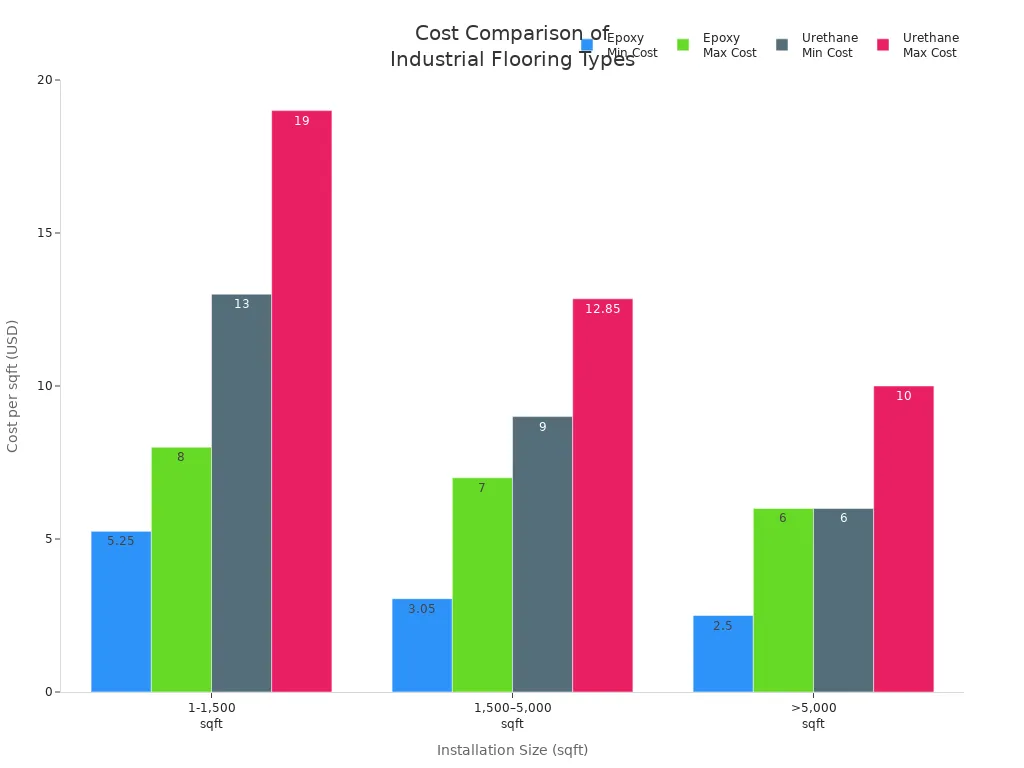
The cost of epoxy flooring varies based on the type and thickness required. Here’s a breakdown of average costs per square foot:
Mid-grade systems: $5 to $8
High-performance systems: $8 to $12+
For larger projects, volume pricing may apply, reducing the overall cost per square foot. The thickness and number of coats significantly influence the price, as a standard system includes a primer, base coat, and topcoat.
Maintenance of Epoxy
To maximize the lifespan of your epoxy flooring, follow these maintenance practices:
Regularly clean the surface by sweeping or vacuuming debris and mopping with a mild cleanser.
Avoid harsh chemicals and abrasive cleaners that can damage the surface.
Conduct inspections to identify early signs of damage, such as cracks or chips.
Reapply a topcoat periodically to restore appearance and provide additional protection.
These maintenance requirements help ensure that your epoxy flooring remains in excellent condition over time.
Ideal Applications for Epoxy
Epoxy flooring is suitable for various industrial applications, including:
Manufacturing Facilities: Durable flooring withstands heavy machinery and chemicals.
Food Processing Plants: Hygienic surfaces resist bacteria and are easy to clean.
Automotive Shops: Chemical resistance allows for easy cleanup of oils and greases.
Warehouses: Strong surfaces handle heavy loads and high traffic.
Hospitals: Seamless, non-porous surfaces prioritize cleanliness and infection control.
The combination of durability, chemical resistance, and low maintenance needs makes epoxy flooring an excellent choice for these environments.
Polished Concrete Floors
Properties of Polished Concrete
Polished concrete floors consist of a concrete slab that undergoes a multi-step grinding and polishing process. This process enhances the surface’s durability and aesthetic appeal. The use of chemical densifiers during polishing increases the surface density, converting calcium hydroxide into calcium silicate hydrate. This reaction boosts durability and abrasion resistance by up to 60%. Polished concrete achieves a hardness rating of 7 or more on Moh’s scale, making it more resilient than many other flooring options.
Advantages of Polished Concrete
Polished concrete floors offer several advantages that make them a popular choice for various industrial applications:
Advantage | Description |
|---|---|
Aesthetics | Polished concrete provides a sleek, modern look with various finishes that enhance visual appeal. It reflects light, making areas appear larger and more inviting. |
Durability | These floors are highly abrasion-resistant and maintain their appearance over time, showing minimal wear compared to non-polished surfaces. |
Additionally, polished concrete can enhance ambient light by up to 30% through reflection. This increase in light can lead to reduced lighting requirements, improving brightness in the space. Brighter workspaces often correlate with higher productivity and safety.
Disadvantages of Polished Concrete
Despite their many benefits, polished concrete floors have some limitations:
They are more susceptible to visible staining, especially from oil or acidic spills that are not cleaned promptly.
Cracking can occur, which is common in concrete floors. However, these cracks are often considered part of the aesthetic rather than imperfections.
Cost of Polished Concrete
The cost of polished concrete floors typically ranges from $3 to $8 per square foot for industrial facilities. The final price depends on factors such as project size and the desired finish. For more intricate designs or higher-quality finishes, costs can rise to $12 per square foot.
Maintenance of Polished Concrete
Polished concrete requires minimal maintenance compared to other flooring options. Here’s a quick overview of maintenance requirements:
Flooring Type | Maintenance Requirements |
|---|---|
Polished Concrete | Daily cleaning and resealing every 2-3 years. |
Epoxy Flooring | Requires careful cleaning and recoating every 5-10 years. |
Urethane Flooring | Low maintenance, designed for high durability. |
Regular cleaning involves sweeping or mopping with a mild cleanser. Resealing every few years helps maintain the floor’s shine and protects against stains.
Ideal Applications for Polished Concrete
Polished concrete floors are suitable for various industrial applications due to their durability and aesthetic appeal. Here are some ideal settings:
Facility Type | Benefits of Polished Concrete Flooring |
|---|---|
Warehouses | Lower maintenance requirements and improved aesthetics. |
Distribution Centers | Durable and functional, suitable for high-traffic areas. |
Manufacturing Plants | Strong and reliable flooring that enhances the workspace environment. |
Retail Spaces | Aesthetic appeal that transforms the look of the facility. |
Polished concrete floors require less maintenance than untreated or epoxy-coated options. They provide a bright, clean appearance that enhances the overall environment, making them ideal for both industrial and retail settings.
Urethane Flooring
Properties of Urethane
Urethane flooring features a unique chemical structure that provides high tensile strength and flexibility. This flooring absorbs impacts effectively, distributing force across its surface. The combination of durability and flexibility makes urethane ideal for high-traffic areas. It can withstand heavy equipment and repeated weight without cracking or segmenting. Additionally, urethane flooring resists thermal shock, making it suitable for environments with extreme temperature fluctuations.
Advantages of Urethane
Urethane flooring offers several key benefits:
Durability: It withstands heavy traffic and equipment movement.
Slip Resistance: Enhanced safety in busy environments.
Chemical Resistance: Protects against spills and harsh cleaning agents.
Low Maintenance Needs: Routine cleaning keeps it looking new without extensive upkeep.
These advantages make urethane flooring a top choice for various industrial settings.
Disadvantages of Urethane
While urethane flooring has many benefits, it also has some limitations:
Initial Installation Costs: Higher than some alternatives, such as epoxy.
Surface Sensitivity: It may require careful handling during installation to avoid damage.
Cost of Urethane
The cost of urethane flooring varies based on the type and application. Here’s a breakdown of average costs per square foot:
Urethane Type | Cost per Square Foot | Total Cost for 5,000 sq ft |
|---|---|---|
Urethane Cement | $7.00 – $12.00 | $35,000 – $60,000 |
Urethane Cement HF | $10.00 – $15.00 | $50,000 – $75,000 |
Urethane Cement MD | $9.00 – $13.00 | $45,000 – $65,000 |
Enhanced Systems | $15.00 – $20.00 | $75,000 – $100,000 |
Maintenance of Urethane
Urethane flooring requires routine cleaning to maintain its appearance. Regular sweeping and mopping with mild cleaners keep the surface in good condition. Compared to epoxy, urethane is considered low-maintenance, making it a practical choice for busy operations.
Ideal Applications for Urethane
Urethane flooring suits various industrial facilities, including:
Warehouses: Durable enough to handle heavy loads.
Distribution Facilities: Slip-resistant surfaces enhance safety.
Manufacturing Plants: Chemical and thermal shock resistance supports harsh environments.
Commercial Spaces: Aesthetic appeal combined with functionality.
Urethane flooring’s durability and easy maintenance make it an excellent choice for these applications.
Flooring Comparison
Durability Comparison
When comparing durability, urethane flooring excels in high-traffic environments. It withstands heavy equipment and impacts without cracking. While epoxy offers strong durability, it can crack and scratch under extreme conditions. Polished concrete provides decent durability but is less resistant to harsh chemicals.
Feature | Urethane Flooring | Polished Concrete Floors |
|---|---|---|
Durability | Superior in chemical/thermal resistance | Strong, but less resistant to harsh chemicals |
Sanitation | Non-porous, hygienic, easy to sanitize | Porous if not sealed; may need resealing |
Maintenance | Low, periodic cleaning | Very low, occasional resealing |
Cost Comparison
Cost plays a significant role in your flooring decision. Here’s a breakdown of typical costs per square foot:
Flooring Type | Typical Cost per Square Foot |
|---|---|
Commercial Epoxy Flooring | $3 – $7 |
Industrial Epoxy Flooring | $6 – $15 |
Urethane Flooring | $9 – $20 |
Polished concrete often has lower upfront costs, but urethane flooring provides longer-lasting performance, reducing long-term expenses.
Maintenance Comparison
Maintenance requirements differ among flooring types.
Epoxy Flooring: Regular sweeping and mopping keep it clean. You may need to recoat every few years.
Urethane Flooring: Low maintenance with periodic cleaning recommended.
Polished Concrete: Minimal maintenance is needed, with occasional polishing to maintain gloss.
Performance Under Heavy Use
In high-traffic areas, urethane flooring outperforms the others. It handles thermal shock and heavy loads effectively. Epoxy may crack under extreme conditions, while polished concrete can show wear over time. Urethane’s flexibility and impact resistance make it ideal for demanding environments.
In summary, each flooring option offers unique benefits. Epoxy provides excellent chemical resistance. Polished concrete enhances aesthetics and requires minimal maintenance. Urethane excels in durability and flexibility.
Tip: Assess your facility’s specific needs before making a choice. Consider factors like traffic levels, chemical exposure, and maintenance preferences.
FAQ
What is the best flooring option for high-traffic areas?
Urethane flooring excels in high-traffic areas due to its durability and flexibility, making it ideal for heavy equipment and constant movement.
How often should I maintain my epoxy flooring?
You should clean epoxy flooring regularly and reapply a topcoat every 5 to 10 years to maintain its appearance and durability.
Can polished concrete be stained?
Yes, polished concrete can stain if spills are not cleaned promptly. Regular maintenance helps prevent staining and keeps the surface looking new.
See Also
Top 5 Concrete Floor Hardeners for Industrial Use
Selecting the Ideal Concrete Densifier for Warehouse Floors
Comprehensive Guide to Concrete Sealers for Industrial Floors
2025 Guide for Choosing the Right Concrete Floor Hardener
BANDe’s 2025 Tips for Selecting Top Polished Concrete Densifiers
