


You have many choices for what to put on your walls today. Making smart choices is very important for building things now. Inorganic Wall Paint is a strong paint made from minerals. Latex paint is still a common and useful choice. This blog will compare them closely in 2026. We will look at how they are different, what is good about them, and how they are used. Knowing these differences will help you pick the best paint.
Key Takeaways
Inorganic paints use natural minerals to fight off mold, sunlight, and fire much better than latex paints.
Inorganic wall coatings let out no VOC chemicals, which keeps the air inside your home clean and good to breathe.
Inorganic coatings cost more at first, but they last up to twenty years and save you money in the long run.
Core Composition: Inorganic vs. Latex
You need to know what each wall coating is made of. This helps you understand how they are different. Inorganic coatings are made from minerals. They have little to no natural stuff in them. Latex paints are natural coatings. They use water and man-made resins.
Inorganic Wall Paint: Mineral Composition
Inorganic Wall Paint gets its strength from minerals. These paints use mineral glues. Potassium silicate, also called waterglass, is a common glue. It makes a strong, stiff network. Lime is another old mineral glue. These glues react to make strong structures. For example, in silicate glues, a process links silicon and oxygen atoms. This creates strong, mineral networks. These networks help the paint handle high heat. They also make it strong.
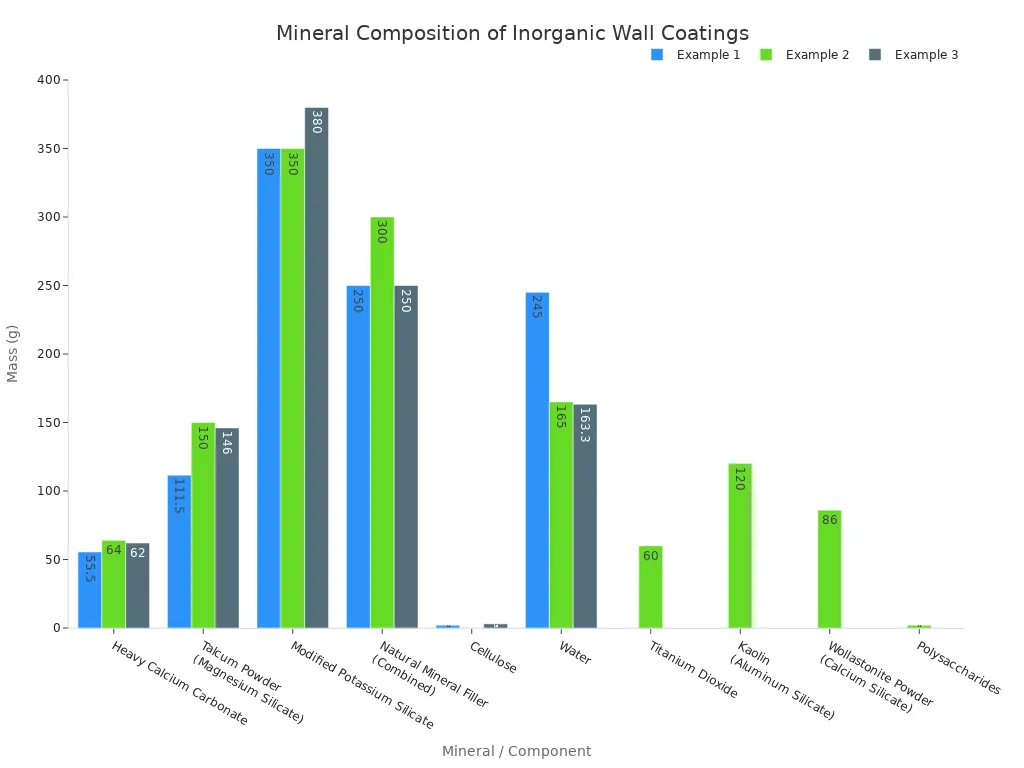
Many other minerals make up Inorganic Wall Paint. You can see some common parts in the chart below. Heavy calcium carbonate and talcum powder fill up space. Kaolin and titanium dioxide are colors. They give the paint color and cover-up power. Wollastonite powder makes it stronger. Water carries everything. These mineral parts make the paint very tough against bad conditions.
Latex Paint: Polymer Emulsion Foundation
Latex paint has a polymer emulsion base. This means it has tiny plastic bits, called polymers, mixed in water. These polymers are man-made resins. They form the paint layer when the water dries up. The chemicals in this polymer mix are very important. Makers change how much “soft” stuff and “hard” stuff they use. Soft stuff makes the paint bendy. Hard stuff makes it tough.
The polymer mix also changes how well the paint sticks. Special parts of the polymer chains are called functional monomers. They have sticky groups. These groups help the paint stick well to many surfaces. This includes concrete, plaster, and wood. The way these polymers are made helps them stick well. It also helps the paint fit the surface. This makes a strong bond and a finish that lasts.
Performance and Durability
You want your wall coatings to last. You also want them to stand up to daily life. This section looks at how well each coating performs over time. It also covers how they handle tough conditions.
Longevity and Environmental Resistance
Inorganic coatings last a very long time. They do not fade from sunlight as much as other paints. Sunlight, or UV rays, slowly breaks down paint chemicals. Inorganic colors, like iron oxide, are very strong. They do not break down easily in strong sunlight. This means your walls keep their color longer. Earthy colors, like tans and browns, use these strong mineral colors. They last longer outside. Colors in many latex paints are not as strong. They are more likely to fade. This is true for bright reds or dark blues. Good paints with inorganic colors also have a strong acrylic binder. This binder keeps the colors safe from sunlight. It helps the color stay bright.
Inorganic coatings also stop mold and germs from growing. Their mineral parts do not feed mold. This is why they stop growth. Wet air makes moisture. It is important to pick inorganic materials that do not soak up water. This stops moisture from building up. This removes what mold needs to grow. This makes them good for wet places. Inorganic coatings also do not burn easily. This makes them a good choice for big buildings. Latex paint is usually strong. But it is not as good as inorganic paints at handling very bad conditions.
Breathability and Moisture Control
Breathability means how well a wall coating lets water vapor pass through. Inorganic coatings let air pass through easily. They let water vapor move freely through the wall. This stops water from building up inside the walls. Breathable inside paint, like an inorganic coating, lets air through well. It does not make a solid layer. This means water can easily get out. This stops problems like cracking or peeling.
Latex paint, however, makes a solid layer. This layer can trap water. When water cannot get out, it can cause problems. It can make paint crack or peel off the wall. This trapped water can also make a wet place. This wetness can help mold and mildew grow. You need to control moisture well to keep your walls healthy. Inorganic Wall Paint helps control moisture naturally. This keeps your inside air drier and healthier.
Environmental Impact & Health
VOCs and Indoor Air Quality
You want clean air inside your buildings. VOCs are chemicals. They can turn into gas in the air. These chemicals can hurt your health. Inorganic wall coatings let out no VOCs. This makes them a much healthier choice for your indoor areas. You breathe cleaner air when you use these coatings. This is extra important for people with allergies or breathing problems.
Regular latex paints often have VOCs. The amounts can be different. Some latex paints have few VOCs. But even small amounts can change air quality. You avoid these worries completely with inorganic choices. Picking coatings with no VOCs helps make a safer place. It keeps everyone living or working there safe.
Sustainability and Lifecycle
You also think about how things affect our planet. Inorganic Wall Paint comes from natural minerals. There are many of these materials. Making them often uses less power. This means less harm to the environment. It also lasts a long time, so you paint less often. This means less trash and less need for new stuff over time.
Latex paints are common, but they use man-made plastics. These plastics come from oil. Making them can use more resources. You might also need to paint more often with latex. This means using more materials. It also makes more trash during the product’s life. Choosing inorganic coatings helps create a greener future.
Application, Maintenance & Aesthetics
Application Ease and Surface Prep
You will find latex paint generally easy to put on. It dries fast. This helps you finish your work quicker. You can use brushes, rollers, or sprayers. This makes it a good choice for many home projects. You often do not need to do much to get the surface ready for latex paint. You usually just need a clean, dry, and good surface.
When you put on inorganic coatings, you need to get the surface very ready. For example, if you work with ASTM A36 Carbon Steel, you must grit blast it to SSPC-SP5. This means making it a “White Metal” finish. You use G50 grit. This makes a rough surface of 1-3 mils. This careful preparation makes sure the coating sticks well. This strong stick is very important for the coating to last a long time.
Cleaning, Repair, and Finish Options
Latex paint has many bright color choices. You can easily clean most latex-painted walls with soap and water. If you get a scratch or a chip, you can often fix it. This makes it easy to take care of for normal use. You can pick from different shininess levels, like flat, eggshell, satin, semi-gloss, and high-gloss.
Inorganic coatings need little care because they last a long time. They naturally fight dirt and mold. This means you clean them less often. Their mineral parts make them very hard to harm. You will not need to fix them as much. These coatings often give a special, natural, dull finish. This finish gives your walls a clear mineral look. You get a fancy look that lasts for many years.
Cost-Effectiveness & Value
You always consider the financial side of any project. This section helps you understand the money implications. You will see how initial costs compare to long-term value.
Initial Costs vs. Long-Term Savings
You might notice that high-performance inorganic coatings usually cost more at first. You can expect to pay about $0.75 to $1.50 per square foot for the upfront cost. This is often higher than standard latex paints. However, you gain significant long-term savings. These savings come from their superior durability and low maintenance needs. You invest more initially. You then save money over many years.
Consider a 20-year period. You will see a clear financial benefit. Inorganic coatings offer net savings of $2.00 to $4.50 per square foot over two decades. This means you get a positive return on your investment. You spend more at the start. You save much more later. Latex paint might seem cheaper to buy. You might also pay less to put it on. But you often need to repaint more often. This adds up to higher costs over time. You save money by choosing the more durable option.
Lifespan and Maintenance Economics
You want your coatings to last. Inorganic coatings offer exceptional durability. They typically last 15 to 20 years. This long lifespan means you do not need to repaint as often. You save money on materials and labor for future painting jobs. This significantly reduces your overall expenses.
You also benefit from minimal maintenance requirements. Inorganic coatings naturally resist dirt, mold, and fading. You spend less time and money cleaning your walls. You also avoid frequent repairs or touch-ups. This leads to lower lifecycle costs. You get a coating that performs well for a long time. You also spend less money keeping it looking good.
Think about latex paint. You might need to clean it more often. You might also need to repaint it every few years. These repeated costs add up. You pay for new paint. You also pay for the labor to apply it. Over 20 years, these recurring expenses make latex paint more costly. You choose inorganic coatings for their long-term value. You get a durable finish. You also save money on maintenance and future repainting. This makes them a smart financial choice for many projects.
You now know the main differences. Inorganic coatings are very strong, good for your health, and save you money over time. Latex paint is easy to put on and costs less at first. Pick what you need based on your money, care for the earth, and how long you want it to last. These ways of making paint will get better. Think about everything carefully. Ask experts for help that fits your needs.
FAQ
Which coating should I choose for my home?
You should choose based on what is most important to you. Pick inorganic if you want it to last a long time, be good for your health, and help the environment. Choose latex if you want to spend less money at first and have an easier time putting it on.
Can I apply latex paint over an inorganic coating?
You usually should not. Inorganic coatings let air through. Latex makes a layer that can trap water. This can make the paint peel off. Ask an expert for special advice.
Do inorganic coatings offer many color options?
You will find many natural, earth-like colors. These colors come from minerals. They give a special, dull finish. They might not have as many bright colors as latex paint.
See Also
Inorganic Versus Organic Wall Coatings A Complete 2025 Guide
Discover The Breakthrough Science Behind Inorganic Anion Wall Paints
Transform Your Home Living Space With Inorganic Anion Paints
Create A Healthy Eco Friendly Space With Seven Color Coatings
