

Choosing a safe non-toxic concrete sealer for indoor surfaces is very important. It helps keep you healthy and improves air quality. Low and zero-VOC options lower your exposure to harmful chemicals. These products are safe for people who are sensitive to chemicals. They also provide protective finishes that make your home safer. When picking a sealer, think about its ingredients, certifications, and how to apply it.
Key Takeaways
Pick low or no-VOC concrete sealers. They help your health and make indoor air better.
Check for eco-friendly labels on sealers. This shows they are safe and good for the environment.
Get your concrete surface ready. Clean it, fix it, and etch it before putting on the sealer. This gives the best results.
Know the Ingredients
It is very important to know the ingredients in concrete sealers. This knowledge helps keep you safe and healthy. Many sealers have harmful chemicals. These can hurt the air quality inside your home. You should choose sealers with low or zero VOCs (Volatile Organic Compounds). These choices are better for you and your family.
Low-VOC Options
Low-VOC sealers are usually water-based. This makes them safer than solvent-based ones. Here are some important facts about low-VOC sealers:
Most sealers sold today are water-based and safe.
Solvent-based sealers can be dangerous because they have high VOC levels.
Low-VOC sealers release much fewer VOCs, often 0 grams per liter. In contrast, standard solvent-based sealers can go over 400 grams per liter.
Type of Sealer | VOC Emissions (grams per liter) |
|---|---|
Low-VOC Sealers | 0 g/l |
Standard Solvent-based | >400 g/l |
Eco-Friendly Certifications
When you pick a concrete sealer, check for eco-friendly certifications. These labels show that the product meets certain environmental rules. For example, many non-toxic sealers do not have harmful things like phthalates and heavy metals.
Tip: Always look at the packaging for certifications. This helps make sure the product is good for your health and the environment.
By choosing sealers with low VOCs and eco-friendly certifications, you help create a healthier home. You protect your indoor air quality and the planet too.
Best Concrete Sealer Types
When you pick a concrete sealer, you have many choices. Two common types are polyurethanes and acrylics/epoxies. Each type has special features that help your indoor surfaces.
Polyurethanes
Polyurethane coatings are very strong against chemicals and wear. They make a tough layer that is great for busy areas. Here are some good and bad points about using polyurethane sealers:
Advantages | Disadvantages |
|---|---|
Strong against chemicals and wear | Usually costs more than acrylics and epoxies |
Tough and long-lasting | Can be slippery when wet, needs anti-skid additives |
Better UV protection and color stays nice | Some may trap moisture because they aren’t breathable |
Good for busy areas and looks nice | Needs the surface to be ready for best sticking |
Works well at lower temperatures than other coatings | Can’t be used on new concrete, must wait until it fully cures |
Acrylics and Epoxies
Acrylic sealers are simple to use and good for the environment, especially if they are water-based. They usually last 1-3 years. However, they can get slippery when wet, so think about adding anti-skid materials. Epoxy coatings are very strong and can last 5-7 years or longer. They also resist chemicals well but may cost more.
Type of Sealer | Durability | Safety | Environmental Impact |
|---|---|---|---|
Acrylic | 1-3 years | Can be slippery; anti-skid recommended | Water-based is better for the environment |
Epoxy | 5-7 years or more | Can be slippery; anti-skid recommended | Not UV resistant, but some have special additives |
Both acrylic and epoxy sealers can improve your indoor areas while keeping them safe and strong.
How to Seal Concrete Properly
Surface Preparation
Getting the surface ready is very important for good results when sealing concrete. Follow these steps to make sure it sticks well:
Clean the Surface Thoroughly: Use a power washer outside or sweep and mop inside. For grease stains, use a degreaser. If stains are tough, try a concrete cleaner.
Repair Any Damage: Check the surface for cracks or holes. Fill these spots with a concrete repair product and let them dry completely.
Etch the Surface (If Necessary): For new concrete, etch the surface to help it stick better. Use a commercial etching solution or muriatic acid, but follow safety rules.
Application Techniques
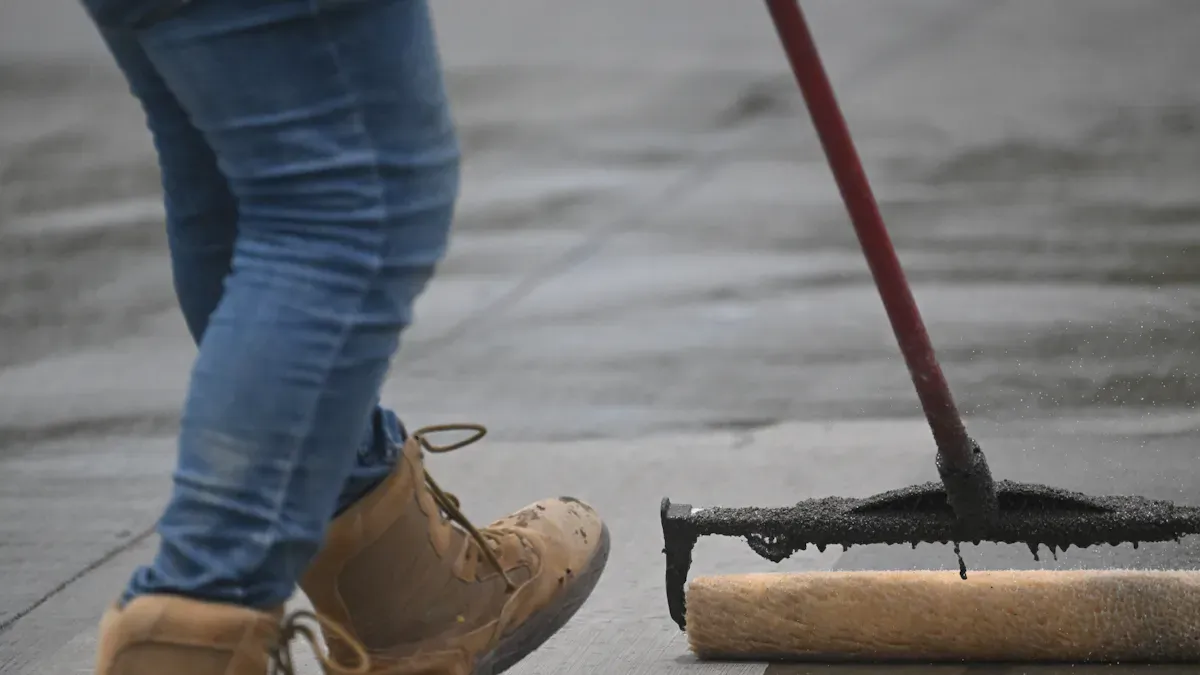
After preparing the surface, focus on how to apply the sealer for an even coat. Here are some good methods:
Use the Right Tools: A paint roller or sprayer is great for big areas, while a brush works for small spots.
Apply the Sealer in Thin Layers: Start from one corner and put on thin, even layers. This helps prevent bubbles and streaks.
Allow the First Coat to Dry: Let the first coat dry completely, usually 1-2 hours, before adding more coats.
Monitor Environmental Conditions: Make sure the temperature is above 50°F and don’t apply if rain is coming in the next 12 hours.
By following these steps, you can avoid common mistakes with concrete sealers and get a strong finish. Remember, good ventilation during application is important for safety and effectiveness.
Check Durability and Performance
How Long It Lasts
When picking a concrete sealer, think about how long it lasts. A good sealer should protect your surfaces for a long time. Many non-toxic sealers are just as strong as regular ones. They can resist water and keep looking good over time. Taking care of your sealer can help it last longer. Here are some tips:
Look for signs of scratches or cracks often.
Put on a new coat of sealer every few years to keep it lasting.
Customer Reviews
Customer reviews and expert advice are very important for checking how well sealers work. Many customers are happy with how easy they are to use and the results they get. Here are some common points from customer reviews:
Customers often talk about successful uses and lasting results.
Many reviews mention good experiences with customer service, showing a helpful buying process.
Look | |
|---|---|
Water-Based | Natural, satin finish |
Solvent-Based | Shiny, wet-look finish |
You can also find reviews that show how reliable non-toxic products are. These opinions help you choose the best concrete sealer for your home.
By checking both how long it lasts and what customers say, you can choose a sealer that fits your needs and improves your indoor areas.
Test Before Committing
Testing your concrete sealer before you decide is very important. You want to make sure the product works well on your surface. Doing a jobsite sample can show you how the sealer acts in real life.
Jobsite Samples
A jobsite sample helps you see how well the sealer works on your concrete. Here’s how to do it:
Choose a Small Area: Pick a part of your concrete that shows what the whole surface is like.
Apply the Sealer: Follow the instructions from the maker for applying it. Use the same tools you will use for the full job.
Observe the Results: After the sealer dries, look for problems like bubbles or color changes. This step helps you make sure you picked the best concrete sealer for you.
Small Area Tests
Besides jobsite samples, doing small area tests can give you useful information. Here’s what to do:
Pick a Test Spot: Choose a corner or a spot that isn’t very visible.
Apply the Sealer: Use the same method you plan to use for the bigger area.
Monitor Performance: After a few days, check how the sealer stands up to wear and moisture. This test will help you see how strong it is and if it works well with your surface.
By following these steps, you can choose a sealer that meets your needs and keeps your home safe.
To sum up, picking the right concrete sealer for your home means knowing about ingredients, types, and how to apply it. You should focus on safety by choosing low-VOC options and looking for eco-friendly labels. Don’t forget to avoid mistakes like sealing wet surfaces or applying in bad weather. Spend time researching and testing products before you decide. Your health and home are worth it!
FAQ
What is the best concrete sealer for indoor use?
The best concrete sealer for indoor use is a water-based option with low VOCs. It keeps you safe and protects your surfaces well.
How often should I reapply concrete sealer?
You should reapply concrete sealer every 1 to 3 years. This depends on how much wear there is and the conditions around it. Regular care helps keep your surfaces safe.
Can I use a concrete sealer on new concrete?
No, you need to wait until new concrete is fully cured before using a sealer. This usually takes about 28 days for the best results.
See Also
Top 10 Concrete Sealers for Surface Protection Today
A Comprehensive Guide to Selecting Concrete Sealers
Five Simple Tips for Concrete Hardening in 2025
