

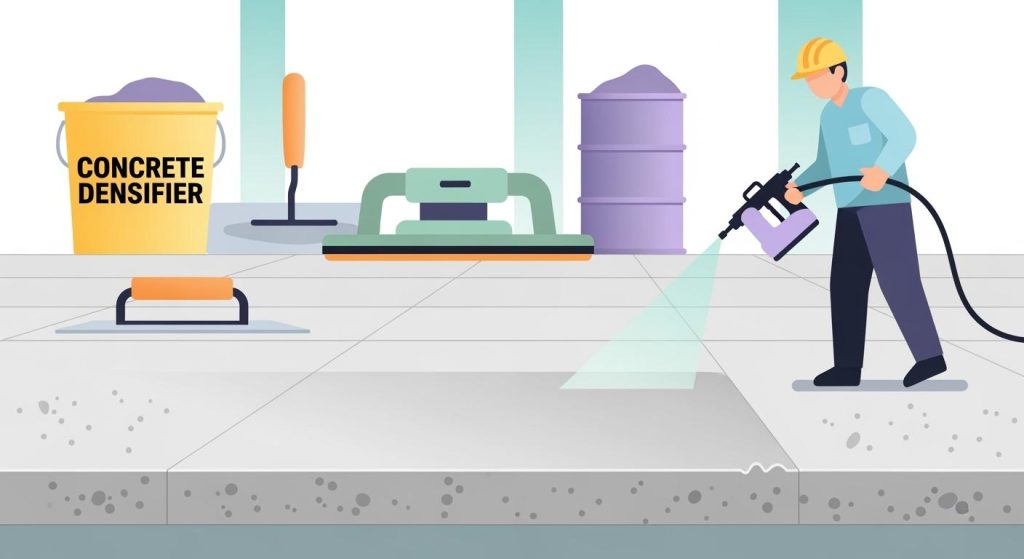
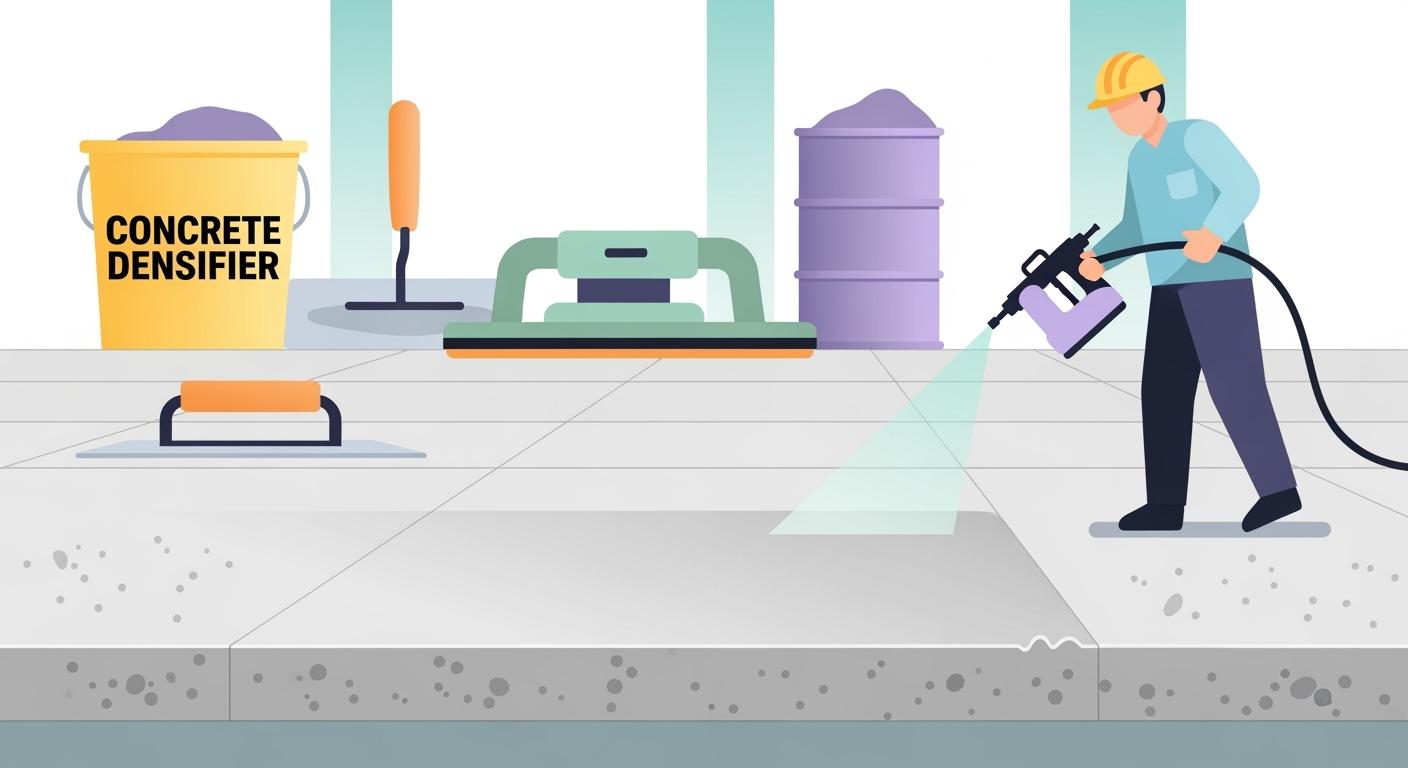
Concrete densifiers are chemical solutions that enhance the durability and longevity of concrete surfaces. They work by penetrating the concrete and reacting with its components. Many people mistakenly believe that these densifiers can penetrate deep into the concrete or replace curing compounds. In reality, they primarily react with calcium hydroxide, forming crystals that improve surface strength.
Key Takeaways
Concrete densifiers enhance the durability of surfaces by reacting with calcium hydroxide, forming crystals that strengthen the concrete.
Using densifiers reduces dusting and improves stain resistance, making your concrete surfaces cleaner and easier to maintain.
Proper surface preparation and application techniques are crucial for maximizing the benefits of concrete densifiers, leading to longer-lasting results.
Concrete Densifiers Overview
Purpose of Concrete Densifiers
Concrete densifiers play a crucial role in enhancing the performance of concrete surfaces. They work by penetrating the concrete and reacting with its components, primarily calcium hydroxide. This reaction produces calcium silicate hydrate, which forms a denser, crystalline structure within the concrete. As a result, you get a stronger surface that can withstand wear and tear.
Using a concrete densifier offers several benefits. For instance, it significantly increases the density of the concrete, making it more durable and less prone to damage. Here are some key advantages:
Reduced Dusting: Densifiers minimize dusting, keeping your spaces cleaner.
Enhanced Wear Resistance: They improve resistance to stains and abrasions, which is especially important in high-traffic areas.
Lower Moisture Absorption: This leads to fewer repairs and maintenance over time.
In modern construction projects, concrete densifiers are essential. They not only enhance the longevity of polished concrete but also prevent issues like scratching and scuffing. You’ll find that densifiers are particularly useful in industrial settings, where they resist chemical spills and heavy machinery impacts.
By introducing a concrete densifier, you transform weaker, porous material into a hard, binding product. This change is vital for maintaining the level of polish achieved through diamond grinding. Overall, concrete densifiers are a smart investment for anyone looking to improve the quality and durability of their concrete surfaces.
How Concrete Densifiers Work
Chemical Reactions
When you apply a concrete densifier, a series of fascinating chemical reactions take place. These reactions are crucial for enhancing the strength and durability of your concrete surfaces. Here’s how it works:
Reaction with Calcium Hydroxide: The densifier reacts with free calcium hydroxide in the concrete. This reaction produces calcium silicate hydrate (C-S-H), which is essential for increasing the density and strength of the concrete.
Filling Micro Pores: As more C-S-H forms, it fills the micro pores within the concrete. This process significantly improves abrasion resistance and overall durability.
Permanent Integration: Unlike some surface treatments, the reaction is permanent and irreversible. The densifier integrates into the concrete structure, rather than just coating the surface.
The formation of C-S-H crystals is particularly important. These crystals create a denser structure by filling voids and pores in the concrete. Here are some key benefits of this process:
Increased Resistance: The densification enhances the concrete’s resistance to moisture penetration and abrasion.
Hardness Improvement: You can expect an increase in concrete hardness by 30-40% due to the formation of C-S-H, leading to better wear resistance.
Reduced Porosity: The densifier reduces porosity and permeability, making your concrete surfaces stronger and more durable.
Types of Concrete Densifiers
Silicate-Based Densifiers
Silicate-based densifiers are popular choices in the construction industry. They primarily consist of sodium or potassium silicates. These densifiers react with free lime in the concrete, forming calcium silicate hydrate (C-S-H). This process enhances the concrete’s strength and durability. Here are some key characteristics of silicate-based densifiers:
Characteristic | Description |
|---|---|
Chemical Composition | These densifiers are alkali silicate solutions that improve concrete integrity. |
Gelation Behavior | They typically have a faster gelation process, allowing for quicker results. |
Micro-filling Effect | The silicate gel fills pores, enhancing hardness and reducing porosity. |
Using silicate-based densifiers can lead to a more stable and durable surface. You might notice increased strength, with some products boosting compressive strength by up to 2000 psi. This makes them ideal for high-traffic areas.
Lithium-Based Densifiers
On the other hand, lithium-based densifiers offer unique advantages. They are known for their superior performance in reducing water permeability. In fact, they can achieve a 20% better reduction compared to untreated concrete. Here’s a quick comparison of lithium-based and silicate-based densifiers:
Densifier Type | Water Permeability Reduction | Gelation Process Characteristics |
|---|---|---|
Lithium-based | 20% better than untreated | Delayed with higher silicate modulus |
Silicate-based | Lower reduction rate | Faster gelation process |
Lithium-based densifiers also provide enhanced durability and require less frequent reapplication. This makes them a cost-effective choice in the long run. You’ll find that they create a harder surface, which is perfect for areas that experience heavy use.
By understanding the differences between these two types of concrete densifiers, you can make an informed decision for your next project.
Application Methods for Concrete Densifiers
Surface Preparation
Before applying a concrete densifier, you must prepare the surface properly. A clean surface is crucial for effective penetration and reaction. Here are the recommended steps for preparing your concrete surface:
Ensure the surface is clean by removing oil, grease, dirt, and loose contaminants.
If the surface is new or uncoated, clean and etch it using a suitable product, allowing it to stand for 10-20 minutes.
Vigorously scrub the surface with a stiff-bristled brush, ensuring it does not dry out.
Rinse thoroughly with clean water, preventing the rinse solution from entering storm drains.
Remove excess water with a non-metal squeegee or mop.
Allow the surface to dry until it feels like medium grit sandpaper and is free of residue.
Proper surface preparation impacts the effectiveness of concrete densifiers significantly. If the surface has oils or sealers, the densifier won’t penetrate effectively, limiting its benefits.
Application Techniques
Once your surface is ready, you can apply the densifier using effective techniques. Here’s a quick overview of the best practices:
Application Method | Description |
|---|---|
Surface Preparation | Clean the surface to remove sealers and debris for effective penetration. |
Low-Pressure Sprayer | Use a low-pressure sprayer to saturate the surface with the densifier. |
Timing | Keep the surface wet for about 20 minutes to ensure full saturation. |
Use of Surfactants | Some densifiers contain surfactants to enhance penetration without agitation. |
Application Rate | Typical coverage is 400-600 sq.ft./gallon, avoiding puddling. |
Maintenance | Use pH-neutral cleaners with auto-scrubbers for ongoing maintenance. |
By following these application techniques, you maximize the benefits of your concrete densifier. Remember, a well-prepared surface and proper application can lead to a more durable and long-lasting concrete finish.
Benefits of Using Concrete Densifiers
Enhanced Durability
When you use concrete densifiers, you significantly boost the durability of your concrete surfaces. This enhancement comes from a combination of chemical reactions and physical changes that densifiers create within the concrete matrix. Here’s how they work:
Increased Surface Hardness: Studies show that concrete densifiers can enhance surface hardness by as much as 45%. This increase means your concrete flooring becomes more resistant to wear and tear.
Reduced Dusting: Densifiers help prevent dusting, which is crucial for maintaining indoor air quality. A dustproof concrete surface keeps your environment cleaner and healthier.
Longer Service Life: By increasing abrasion resistance, densifiers extend the service life of your concrete floors. You’ll notice fewer defects and less need for repairs over time.
Here’s a quick look at how densifiers contribute to reducing surface wear in high-traffic areas:
Process | Description |
|---|---|
Chemical Reaction | Densifiers chemically react with unreacted cement and lime compounds in concrete. |
Pore Filling | They fill microscopic pores, creating a denser and harder surface. |
Crystallization | The process leads to a permanent and irreversible crystalline structure that enhances durability. |
Using densifiers not only strengthens your concrete but also makes it more resilient against foot traffic and machinery. This is especially important in commercial settings where durability is key.
Cost-Effectiveness
Investing in concrete densifiers is a smart financial decision. Here’s why:
Lower Maintenance Costs: Densified surfaces require less frequent maintenance. A smoother surface is easier to clean, as dirt doesn’t embed in the pores. This means you save time and money on cleaning supplies and labor.
Extended Lifespan: By strengthening your concrete flooring, you extend its usable life by years or even decades. This longevity reduces the need for costly replacements.
Improved Stain Resistance: Densifiers create fewer pathways for liquids to penetrate, making spills easier to clean up. This feature is particularly beneficial in environments where spills are common.
In summary, concrete densifiers significantly enhance the quality and longevity of your concrete surfaces. They improve durability, reduce dusting, and provide a polished look. Here’s a quick recap of their benefits:
Benefit Type | Description |
|---|---|
Durability | Densifiers create a denser, more resilient surface that withstands heavy use. |
Aesthetics | They improve visual appeal by reducing porosity and providing a smoother, shinier finish. |
Maintenance Reduction | Users report significant reductions in maintenance costs, with one facility noting a 22% decrease. |
Consider using concrete densifiers in your future projects. They offer a cost-effective solution that pays off in the long run!
FAQ
What is a concrete densifier?
A concrete densifier is a chemical solution that strengthens and enhances the durability of concrete surfaces.
How long does it take for concrete densifiers to work?
Typically, you’ll see results within 24 to 48 hours after application, depending on the product and conditions.
Can I apply a densifier on old concrete?
Absolutely! Applying a densifier on old concrete can rejuvenate the surface and improve its durability significantly.
See Also
Understanding Concrete Densifiers: Their Function and Mechanism
Exploring Concrete Densifiers, Hardeners, Sealers: Their Functions Explained
Distinguishing Between Concrete Densifiers and Hardeners: Key Differences
Discovering BANDě Concrete Densifiers: Their Functionality Explained
The Role of Lithium Densifiers in Transforming Concrete Structures
