

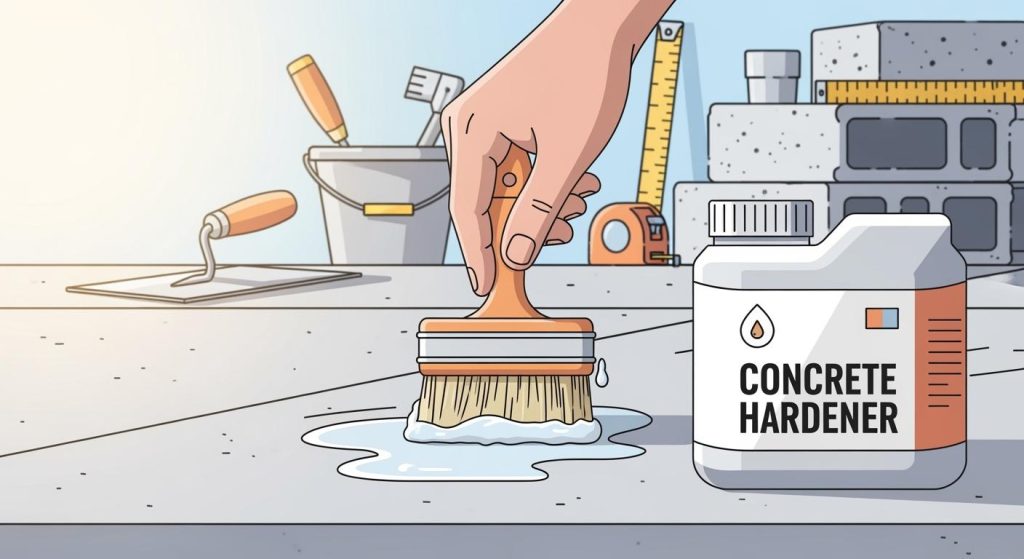
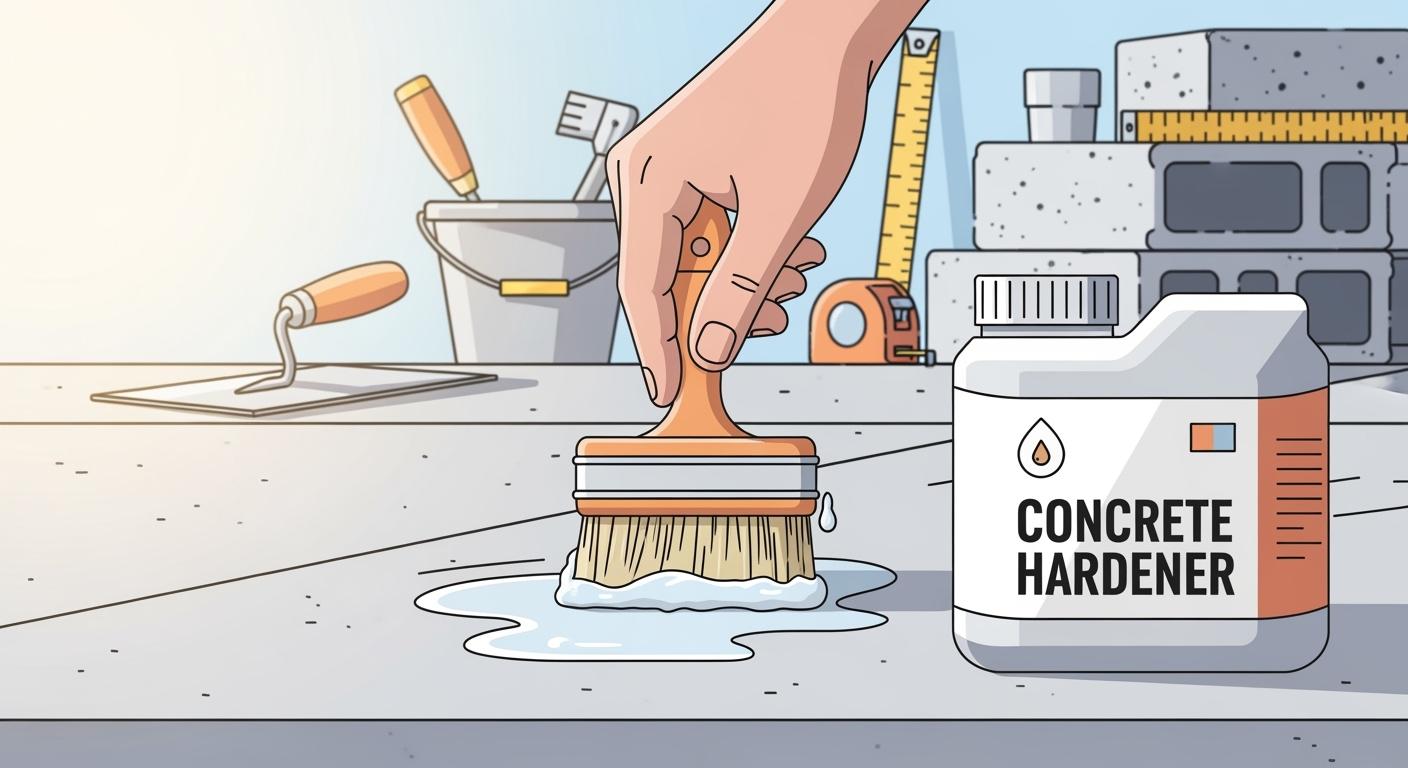
Concrete hardener, or what is concrete hardener, plays a crucial role in construction. It enhances the durability of concrete surfaces and reduces porosity, making them less sensitive to stains. By preventing stains and soil from penetrating, it improves safety against corrosion and freeze-thaw damage. Ultimately, these benefits increase the longevity of concrete and lower maintenance needs.
Key Takeaways
Concrete hardeners enhance durability and reduce porosity, making surfaces less prone to stains and damage.
Choosing the right type of concrete hardener is crucial for optimal performance; options include liquid, powder, and paste hardeners.
Applying concrete hardener correctly can significantly extend the lifespan of concrete surfaces, leading to lower maintenance costs.
What is Concrete Hardener?
Definition and Purpose
Concrete hardener is a specialized treatment applied to concrete surfaces to enhance their durability, resistance, and overall appearance. This treatment chemically reacts with the concrete, creating a denser layer that significantly improves its ability to withstand wear and environmental factors. The primary purposes of concrete hardeners include:
Sealing and Reinforcing: They seal and reinforce microscopic pores, enhancing the surface’s strength.
Improved Durability: Hardened surfaces can last 30 years or more, significantly outlasting untreated concrete.
Resistance to Elements: They provide resistance to water, oil, and chemicals, making maintenance easier.
Mold and Bacteria Prevention: Liquid hardeners prevent mold and bacteria growth, ensuring a clean and safe environment.
Liquid hardeners typically contain silicates such as sodium, potassium, or lithium, which are essential for increasing the hardness of concrete floors. When applied, the hardener penetrates the concrete surface, chemically reacting with it to form a denser, more resistant layer. This process not only enhances usability but also contributes to the longevity of the concrete.
Types of Concrete Hardener
There are several types of concrete hardeners available in the market, each designed for specific applications and performance characteristics. Here are the main types:
Liquid Hardener: Often made from colloidal silica, this type increases density and enhances durability. It provides an even treatment and is suitable for medium-use areas.
Powder Hardener: This type is mixed with water and applied to the surface. It is effective for heavy-duty applications and can improve load-bearing capacity.
Paste Hardener: Typically used for specialized applications, paste hardeners offer a thick layer of protection and are ideal for environments exposed to harsh conditions.
Type of Hardener | Performance Characteristics | Applications |
|---|---|---|
Liquid Hardeners: Colloidal Silica | Increases density, enhances durability, and provides even treatment. | Medium-use areas, easy application. |
Metallic Aggregate Hardeners | Provides a tough surface, excellent for heavy impacts, and increases load-bearing capacity. | Heavy industrial environments. |
Non-Metallic Aggregate Hardeners | Enhances abrasion resistance and durability, cost-effective, and eco-friendly. | Warehouses, factories, distribution centers. |
Epoxy & Urethane Coatings | Offers chemical resistance, aesthetic appeal, and strong protective layer. | Environments with chemical exposure. |
Choosing the right type of concrete hardener is crucial for achieving optimal concrete treatment. Each type serves a unique purpose and can significantly impact the performance and longevity of your concrete surfaces.
How Does Concrete Hardener Work?
Chemical Reactions
When a concrete hardener is applied, it initiates several important chemical reactions. These reactions primarily involve the interaction of the hardener with components in the concrete, such as free lime and calcium hydroxide. Here are some key processes:
Densifiers react with free lime and calcium hydroxide, solidifying the concrete and enhancing surface density.
LIQUI-HARD fills the pores of the concrete, leading to a denser surface that significantly improves durability and abrasion resistance.
Chemical floor hardeners interact with calcium hydroxide and lime, creating a sustainable floor resistant to dirt, grime, and stains.
These reactions produce calcium silicate hydrate (CSH), which enhances the density and durability of the concrete, making it more resilient against wear and environmental factors.
Physical Changes in Concrete
The application of a concrete hardener results in notable physical changes. After treatment, the concrete becomes much harder and less porous, which enhances its density. This increased density helps the concrete resist micro-pitting, reducing dusting and wear. Additionally, a protective barrier forms, guarding against stains, chipping, cracking, corrosion, erosion, and damage from freeze-thaw cycles.
The treated surface also becomes smoother, locking in tiny concrete particles and minimizing the risk of spills and stains. Overall, these changes contribute to a longer-lasting and more durable concrete surface, making it an essential choice for various construction projects.
Benefits of BANDě Concrete Hardener
Enhanced Durability
BANDě Concrete Hardener significantly enhances the durability of concrete surfaces. This hardener fills microscopic pores, resulting in a denser and stronger material. Studies show that lithium silicate densifiers can reduce water permeability by up to 20% compared to untreated concrete. This reduction helps prevent damage from water infiltration and freeze-thaw cycles.
Mortar treated with CF-S2 densifier demonstrated a remarkable 36.4% increase in compressive strength compared to ordinary Portland cement after sulfate erosion tests.
The hardener coatings significantly enhance the strength of concrete, allowing it to withstand heavy traffic and daily use, thus prolonging its lifespan.
With a lifespan improvement of over 15 years, floors treated with BANDě Concrete Hardener are virtually maintenance-free. This means fewer headaches for facility managers and a more reliable surface for all types of projects.
Cost-Effectiveness
While BANDě Concrete Hardener may have a higher upfront cost than traditional hardeners, it leads to substantial long-term savings. The durability of this hardener reduces the need for frequent repairs or replacements. Cheaper options may require reapplication, increasing overall project costs over time.
Evidence Type | Description |
|---|---|
Lifespan Improvement | Extends concrete floor lifespan considerably, reducing the need for frequent repairs or replacements. |
Cost Efficiency | Long-term savings due to reduced maintenance needs and fewer repairs. |
Maintenance | Floors treated with BANDě are virtually maintenance-free, leading to fewer headaches for facility managers. |
Investing in BANDě Concrete Hardener is a permanent solution for those looking to enhance their concrete surfaces without the worry of ongoing costs.
Ease of Application
Applying BANDě Concrete Hardener is straightforward, making it an ideal choice for various projects. Proper techniques and surface preparation are crucial for maximizing effectiveness. Here are some recommended application methods:
Spraying: Provides even coverage over large areas.
Rolling: Ideal for smaller areas or when spraying is impractical.
Brooming: Can be used with a soft-bristle broom for some liquid hardeners.
Dry Shake Method: Involves broadcasting powder over fresh concrete and power-troweling it in.
Achieving uniform distribution and ensuring the surface remains wet for the recommended time are essential for deep penetration and durability. This ease of application allows contractors to complete projects efficiently while ensuring lasting strength and surface protection.
Concrete Densifiers vs. Concrete Hardener
Key Differences
Concrete densifiers and concrete hardeners serve distinct purposes in construction. Here are the main differences:
Type of Product | |
|---|---|
Concrete Hardeners | Lithium silicates are advanced with non-expansive properties. Sodium silicates are common but can contribute to ASR. |
Concrete Densifiers | Silicas have a longer life expectancy of over 24 months compared to silicates and silicinates. |
Concrete densifiers primarily aim to reduce surface porosity and enhance hardness.
Concrete hardeners focus on strengthening properties and preventing issues like curling in freshly poured concrete.
Both products work to make concrete slabs harder and more resistant to abrasion.
When to Use Each
Choosing between concrete densifiers and concrete hardeners depends on your project needs. Concrete densifiers are ideal for older concrete that suffers from dusting and porosity. They penetrate deeply, forming calcium silicate hydrate (CSH) to enhance internal strength. This makes them perfect for environments like warehouses and factories, where moisture control is critical.
On the other hand, concrete hardeners are best for new concrete installations. They strengthen the surface and mitigate curling issues, ensuring a smooth finish. Consider factors such as traffic load, desired aesthetics, and environmental exposure when making your choice. For instance, in high-traffic areas, using lithium silicates can enhance abrasion resistance, while a hardener like Harbeton offers broad chemical resistance.
Ultimately, understanding the differences and applications of these products will help you make an informed decision for your concrete projects.
Applications of Concrete Floor Hardener
Suitable Projects
Concrete floor hardeners are ideal for a variety of projects where durability and resistance are paramount. Here are some suitable applications:
Industrial Facilities: Warehouses and factories benefit from the enhanced durability of treated floors, which can withstand heavy machinery and foot traffic.
Commercial Spaces: Retail stores and showrooms require aesthetically pleasing and resilient surfaces that can handle daily wear and tear.
Parking Garages: The hardener protects against oil spills and chemical exposure, ensuring a long-lasting surface.
Residential Garages: Homeowners can enjoy a durable and easy-to-maintain floor that resists stains and damage.
The performance of liquid floor hardeners is significantly enhanced when applied after 28 days of curing. This timing allows for optimal penetration and reaction with calcium hydroxide, leading to improved abrasion resistance, impact resistance, and overall durability of the concrete floor.
Application Techniques
Proper application techniques are crucial for maximizing the effectiveness of concrete floor hardeners. Here are some recommended steps:
Prepare the Surface: Clean the floor thoroughly, removing dirt and debris. Repair any cracks or damage before application.
Apply the Floor Hardener: Mix the product as per instructions, then apply evenly using a sprayer or squeegee, ensuring full coverage.
Finishing: Allow the floor to dry completely and consider applying a sealer for added protection.
Use a low-pressure sprayer with a fan-shaped nozzle for even application.
Keep the surface moist for 20-30 minutes after spraying to ensure proper penetration.
Adjust the amount of hardener based on the surface condition.
The methods used for applying densifiers and sealers are crucial. They dictate how well the surface is prepared and how moisture is managed. These factors directly affect the durability and hardness of the concrete floor, ultimately influencing its performance and longevity.
Concrete hardeners are essential for enhancing the durability and longevity of concrete surfaces. They significantly reduce maintenance costs and improve structural integrity. BANDě Concrete Hardener stands out with its ability to create a dense, resilient surface. Consider using it for your next concrete project to ensure lasting quality and performance.
FAQ
What is the best time to apply concrete hardener?
Apply concrete hardener after the initial curing period, typically around 28 days, for optimal results.
Can I use concrete hardener on existing surfaces?
Yes, concrete hardener can be applied to both new and existing concrete surfaces to enhance durability.
How long does concrete hardener last?
Concrete hardener can provide lasting protection for over 15 years, significantly extending the lifespan of your concrete surfaces.
See Also
Understanding Concrete Hardeners: Function and Benefits Explained
Essential Information About BANDě Concrete Floor Hardener
Discovering BANDě Concrete Hardener: Its Purpose and Functionality
