


Untreated concrete floors often suffer from dusting, wear, and damage. A concrete hardener and dustproofer offers effective solutions. These hardeners enhance durability and appearance, transforming your concrete floor. You will learn what concrete hardener is, how it works, and its comprehensive benefits.
Key Takeaways
Concrete hardeners react chemically with concrete to fill microscopic pores and create a much stronger surface.
Dustproofers seal loose particles to eliminate surface dust and boost concrete strength by about forty percent.
Proper surface cleaning and correct drying times ensure your treated concrete floor lasts for a lifetime.
What Are Concrete Hardeners and Dustproofers?
You might wonder what solutions exist for your dusty, worn concrete floor. Concrete hardeners and dustproofers are liquid chemical solutions. You apply them to new or existing cured concrete surfaces. Many people also call these products “densifiers.” For example, BANDě Polished Concrete Densifier is a colorless, odorless, non-toxic, non-flammable, water-based inorganic compound. It offers a permanent solution for your concrete floor.
Defining Concrete Hardeners
A concrete hardener is a specialized liquid solution. It works to strengthen your concrete. This water-based, non-toxic liquid solution reacts with your concrete. It targets free calcium and calcium hydroxide. These are natural byproducts from cement hydration. The reaction transforms these compounds. It creates calcium silicate and calcium silicate hydrate (C-S-H). This process seals microscopic pores within the concrete. It also densifies the structural surface. This makes your concrete hardener effective. There are various types of concrete hardeners, but they all aim to improve durability.
Understanding Concrete Dustproofers
Concrete dustproofers stop your concrete floor from shedding dust. They soak into the porous concrete. They react chemically with unhydrated free lime. This process changes soft, powdery surface compounds. It creates a denser, stronger layer. This layer resists wear and stops dust. A good concrete sealer also acts as a dustproofer. These products meet high industry standards. For example, they often comply with ASTM C 309 Type 1D for curing compounds. They might also have NSF/ANSI 61 certification for contact with drinking water. USDA acceptance is common for food processing areas. Many meet LEED v4 for green building. Tile Council of North America (TCNA) testing confirms adhesion with VCT and thinset mortars. This ensures a reliable concrete hardener and dustproofer.
The Role of Densifiers
Densifiers are crucial for strengthening your concrete. They penetrate deep into the surface. Advanced lithium-based hardeners, for instance, can reach 2 to 4 inches deep. They form a hardened sub-surface zone. Professional-grade systems penetrate much deeper. They go 3 to 4 times deeper than retail products. This deep penetration makes the concrete much more resilient.
How Concrete Hardeners Work to Transform Floors
A concrete hardener and dustproofer does more than just sit on the surface. It actively transforms your concrete at a molecular level. You will see how these products create a stronger, more resilient floor.
Chemical Reaction and Densification
When you apply a concrete hardener, it penetrates deep into the concrete surface. It reacts at a molecular level with ions in set concrete. Upon absorption into the surface, the treatment initiates a chemical reaction. This reaction continuously deposits byproducts at a molecular level. It effectively fills structural voids. These hardeners interact immediately with unreacted lime and calcium. They generate a pore-blocking byproduct. This byproduct retains internal moisture and inhibits evaporation. They also use a proprietary mixture of reactive silicates and surfactants. This mixture encapsulates calcium, increasing mass while hardening and sealing the structure.
The hardeners penetrate the slab deeply. They trigger chemical responses. These responses lower porosity and raise material density. They produce an insoluble gel within the concrete pores. This enhances durability against physical wear, dusting, and environmental degradation. They interact directly with cementitious compounds. This yields a harder, denser surface layer. Penetrating hardeners, formulated with silicates or siliconates, chemically react with the calcium hydroxide inside the concrete. This densification process creates a dense crystalline structure within the porous network. This enhances the hardness and water resistance of the concrete. When you apply hardeners, they engage in a chemical reaction with the free calcium present inside the concrete matrix. This interaction synthesizes calcium silicate. This robust crystalline compound effectively fills the micro-pores. It strengthens the overall surface integrity.
Eliminating Dusting and Wear
This chemical binding and densifying of the top layer of concrete prevents common problems. It stops pitting, surface wear, and cracking. Most importantly, it eliminates dusting. Dusting means shedding loose particles. You get a cleaner, more durable floor. This process gives you a dust-free floor. It makes your concrete surface much smoother and easier to maintain.
Enhancing Concrete Durability
This process solidifies and toughens your concrete floors. They can better withstand heavy loads. They also resist corrosion and freeze-thaw damage. Stains and chipping become less of a problem. Based on ASTM C-42 standard testing, treating concrete with a concrete hardener results in approximately a 40% gain in compressive strength within a 14-day period. This significant increase in strength makes your concrete much more resilient. You gain a floor that lasts longer and performs better under tough conditions.
Applying Concrete Hardeners for Optimal Results
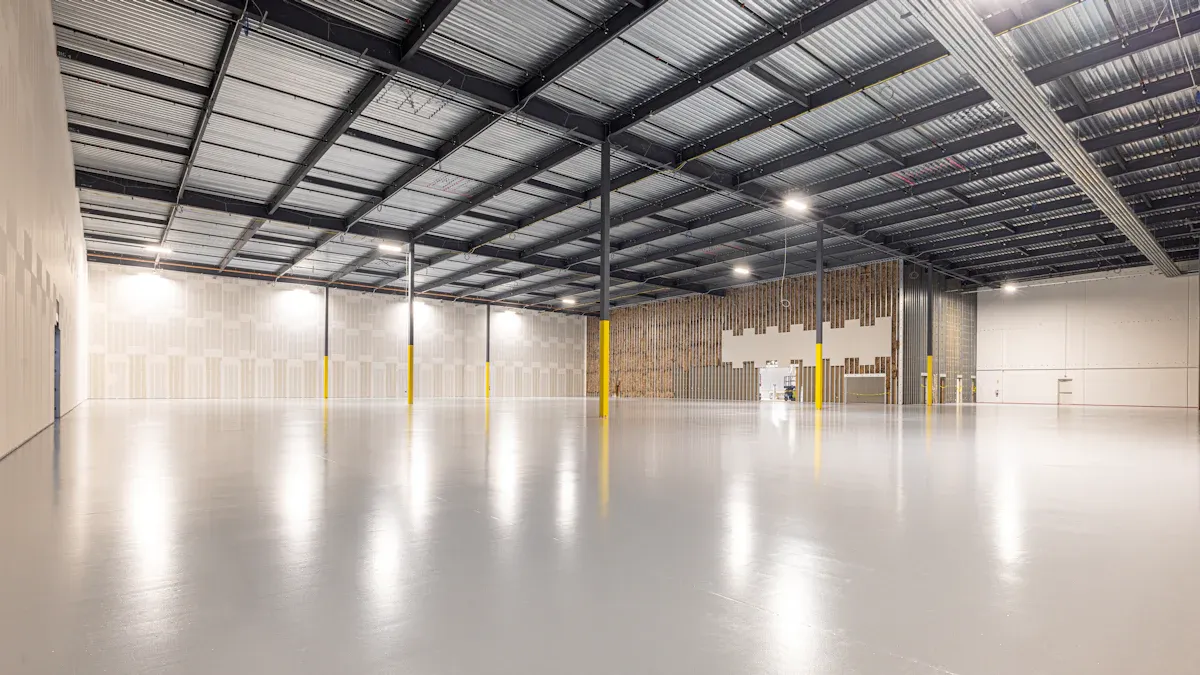
You can achieve the best results when you apply a concrete hardener correctly. Proper application ensures your floor gains maximum strength and durability.
Surface Preparation for Application
Before you apply a concrete hardener, prepare your surface. Clean the concrete thoroughly. Remove all dirt, grease, and existing coatings. This allows the hardener to penetrate deeply. Ensure the concrete is dry and free of debris. This step is crucial for effective treatment.
Step-by-Step Application Process
When you apply the hardener, consider your environment. Adjust mixing amounts based on the shop temperature and humidity. High temperatures or too much hardener can make the gel time too fast. This affects proper application. Apply the hardener evenly across the concrete surface. Use a sprayer or roller. Allow it to soak in. You might need multiple coats. Follow the product instructions for specific drying times between coats.
Post-Application Protection and Care
After you apply a concrete hardener, protect your new floor. Do not enter the area for 4 hours. You can use the area lightly after 24 hours, but do not soak it in water. Cross-operation units must ensure the finished surface has enough strength. They must also use comprehensive protection measures before entering. Strictly forbid dragging or scratching the finished surface with equipment, cables, or tools.
For outdoor concrete, apply concrete sealers. A commercial surface sealer helps protect slabs-on-grade. Let the concrete dry for at least one month after curing before you apply concrete sealers. This is ideal in late summer. Avoid deicing salts and fertilizers. These include calcium, magnesium, or sodium chloride. Use clean sand or crushed stone for traction instead. Ensure proper drainage. Prevent standing water or melted snow from staying on the surface. This avoids freeze-thaw scaling. Apply a high-quality sealer before winter. This creates a protective barrier. It reduces moisture and salt infiltration. This defends outdoor surfaces against harsh winter chemicals and freeze-thaw cycles.
A concrete hardener and dustproofer creates stronger, more resilient concrete. These hardeners enhance your floor’s appearance. You reduce maintenance and extend the life of concrete floors. Consider these solutions for improved performance and lasting value.
FAQ
How long does a hardener last?
A hardener provides permanent densification. It becomes an integral part of your floor. You get long-lasting protection.
Can I apply a hardener to old floors?
Yes, you can apply hardeners to old floors. First, clean the surface thoroughly. This ensures proper penetration and effectiveness.
What if my concrete sealer is damaged?
If your concrete sealer is damaged, you can often fix concrete sealer issues. Clean the area. Then, reapply the sealer to restore protection.
See Also
Understanding Industrial Floor Hardeners And How They Protect Surfaces
A Complete Guide To Concrete Hardeners And Their Mechanisms
Discovering The Hidden Science Behind Concrete Surface Hardening Products
How Concrete Floor Hardeners Function To Increase Surface Strength
Exploring Concrete Densifiers Hardeners And Sealers For Better Floors
