


Liquid hardener for concrete floors, also called concrete densifiers, are water-based, non-toxic clear solutions. These hardeners provide an optimal solution for hardening concrete surfaces, enhancing the durability and hardness of your floor. A chemical used to harden concrete floors, they penetrate, reacting to form a denser, harder surface. This process hardens the surface up to 30%, resisting water, chemicals, and oil. Concrete liquid hardener manufacturer products achieve this.
Key Takeaways
Liquid hardeners chemically react inside concrete to create a much denser and stronger surface layer.
Lithium silicate hardeners penetrate deepest into concrete while avoiding ugly white stains and surface damage.
Apply liquid hardeners to fully cured concrete after twenty-eight days for maximum strength and protection.
Understanding How Concrete Hardeners Work
Penetration and Chemical Reaction
Concrete liquid hardeners are not just coatings; they chemically change the concrete itself. You apply these solutions to the concrete surface. They then begin to penetrate deep into the material. This penetration is crucial for the hardening process. Liquid concrete hardeners typically go to a depth of 3–8 millimeters into the concrete surface. This depth allows them to react with the concrete’s internal structure.
The key to how these hardeners work lies in their chemical makeup. Concrete densifiers are reactive liquid silicate solutions. These include lithium silicate, sodium silicate, and blended silicates. These silicates are the active ingredients. They react with free calcium hydroxide, a natural byproduct of concrete hydration. The MJA Company states that chemical hardeners contain silica in the form of soluble silicates, siliconates, and other reactive ingredients. These components specifically target the weak calcium hydroxide within the concrete. This chemical reaction is the first step toward creating a stronger concrete surface. The hardeners transform the concrete through this deep penetration and chemical interaction.
Forming CSH: The Densification Process
Once the silicate solution penetrates the concrete and finds the calcium hydroxide, a vital chemical reaction occurs. This reaction forms calcium silicate hydrate, or CSH. CSH is the same binder that gives concrete its original strength. The newly formed CSH is a gel-like substance. This gel begins to fill the microscopic voids and capillary pores within the concrete. As the gel grows, it fills these tiny spaces. This process significantly reduces the concrete’s porosity.
The formation of CSH leads to a denser, harder surface. The newly created CSH binds the concrete particles together more tightly. This transforms the top layer into a dense, crystalline solid. A dense CSH network reduces the permeability of the concrete. This makes it harder for water or harmful ions, like chlorides, to penetrate. The enhanced binding efficiency often results in denser concrete matrices with improved durability. This extends the service life of your floor. This densification process is what provides concrete floor hardening. It significantly improves the concrete’s durability and load-bearing capacity. The hardeners make the concrete surface much more resistant to wear and tear. This chemical transformation is how a concrete hardener permanently strengthens your floor.
Types and Benefits of Liquid Hardener for Concrete Floors
Common Types of Silicate Hardeners
You will find several types of silicate hardeners available for concrete floor hardening. The most common types are lithium, sodium, and potassium silicates. Each type has unique properties that affect its performance. Lithium silicate has the smallest molecules. This allows for deeper penetration into the concrete than sodium or potassium silicates. Lithium silicate penetrates 5–8 mm, while potassium silicate reaches only 2–4 mm. This deeper penetration creates a hard, permanent seal. Sodium and potassium silicates, on the other hand, have larger molecules. Sodium silicate is the largest, leading to shallower penetration. It often reacts before full penetration. Potassium silicate is slightly smaller than sodium, allowing for moderate penetration.
Consider the pH effect. Sodium and potassium silicates can raise the concrete’s pH. This may cause surface bloom and a risk of alkali-silica reaction (ASR). Lithium silicate does not raise the pH, avoiding ASR. Surface whitening is another factor. Sodium and potassium silicates often leave a hard, whitish residue that is difficult to remove. Lithium silicate produces only a fine powder you can sweep away. This makes lithium silicate an ideal choice for outdoor surfaces or industrial environments. It becomes insoluble in water once applied and dried. This reduces efflorescence, which is a white, powdery residue.
Application ease also differs. Lithium silicate does not require surface pre-wetting or scrubbing. Sodium and potassium silicates need more intensive application steps. Regarding cost, lithium silicate is the most expensive. However, it overcomes the major drawbacks of the other two types. Sodium silicate is significantly cheaper. Potassium silicate is a premium binder. For high-traffic industrial floors, lithium-silicate densifiers like Consolideck LS and PIP CD-LS3 are ideal. They chemically harden concrete surfaces from within. They help your floor resist wear, reduce dusting, and minimize surface degradation over time.
Enhanced Durability and Resistance
Liquid hardener for concrete floors offers outstanding benefits in the construction industry. These hardeners significantly enhance the durability and load-bearing capacity of your concrete floor. They work by reacting with calcium hydroxide in the concrete. This forms calcium silicate hydrate gels. These gels fill the pores and voids in the concrete surface. This densifies the concrete and reduces its porosity. This process prevents dust from forming by sealing the surface. It also increases abrasion resistance by creating a harder, more durable layer.
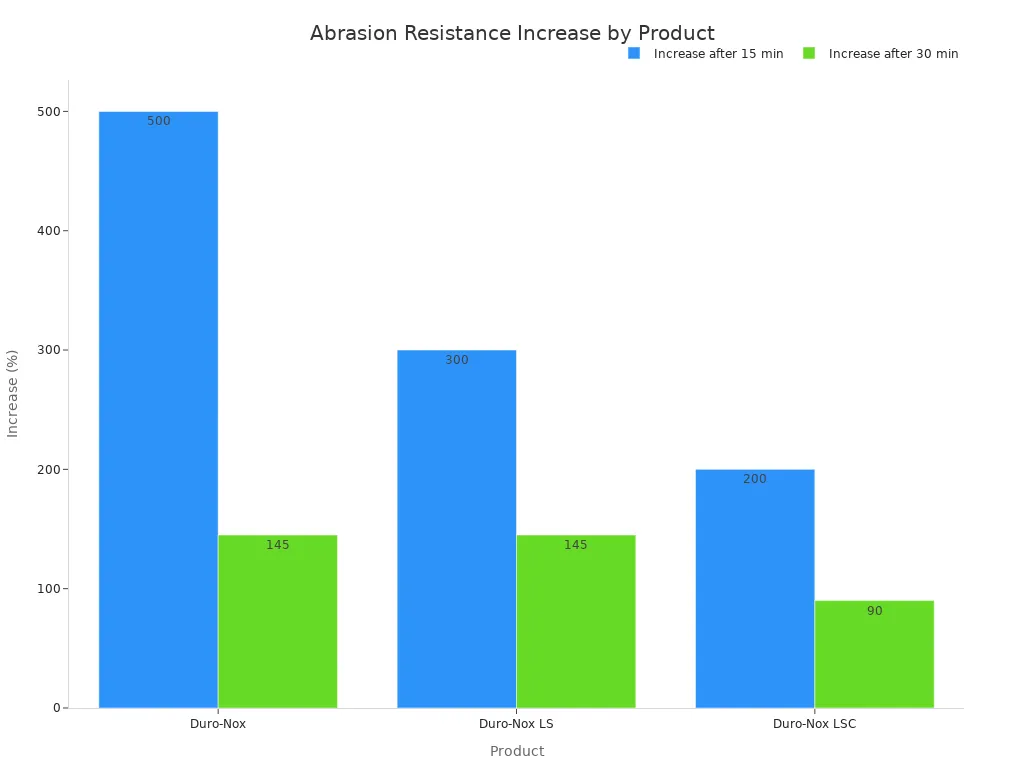
For example, products like Duro-Nox can increase abrasion resistance by 500% after 15 minutes and 145% after 30 minutes. Duro-Nox LS shows a 300% increase after 15 minutes and 145% after 30 minutes. Duro-Nox LSC provides a 200% increase after 15 minutes and 90% after 30 minutes.
The densified surface also helps support water and chemical resistance. Spills are less likely to result in stains. The denser surface makes it more difficult for liquids to penetrate. This increased density also helps to increase water resistance. It minimizes the risk of cracking. This provides better protection for your floor. Additionally, the reduced porosity helps in preventing the growth of mold and bacteria. This contributes to a cleaner and healthier environment.
From a long-term cost perspective, these hardeners offer significant advantages. You only need a single application, saving time and material costs. Low maintenance requirements reduce ongoing expenses. The long-term floor performance eliminates high maintenance costs over the lifecycle of your concrete floor.
Effective Application and Manufacturer Insights
Surface Preparation and Application
To ensure your concrete floor hardening project succeeds, proper surface preparation is crucial. You should use diamond grinding for concrete surface preparation before you apply a concrete hardener. This method effectively cleans and levels the surface, preparing it for sealing. Avoid shot blasting for thin-mil coatings like hardeners; it creates an unsuitable striped blast pattern. Diamond grinding creates smooth, consistent surfaces, preventing visible imperfections. Skipping proper surface preparation, such as failing to remove dirt, dust, or moisture, prevents the hardener from penetrating correctly. Always clean and dry the surface thoroughly.
The timing of application significantly impacts performance. For maximum results, apply liquid floor hardeners after 28 days of concrete curing. Applying the hardener on Day One can lead to underperformance. This happens because insufficient calcium hydroxide is available to react with the hardener. Excessive mix water also prevents deep penetration. Environmental conditions affect curing. High humidity can interfere with epoxy amines, while low temperatures slow the curing process. Choose hardeners designed for your specific working environment. You can expect coverage rates of 300–500 ft²/gal for broomed surfaces and 500–700 ft²/gal for troweled surfaces. Always test a small area first, as coverage varies. Avoid puddling, which occurs from over-application or uneven spraying. This leads to uneven curing, blotchy finishes, or white residue. This is a critical part of the application process of liquid hardener.
Choosing Your Concrete Hardener: Manufacturer Insights
When you choose a concrete hardener, consider the manufacturer’s insights. A reputable concrete liquid hardener manufacturer will have a systematic product testing and development process. They conduct thorough research and testing of raw materials, ensuring stability and durability. Evaluate manufacturers based on their criteria for durability, wear resistance, and applicability in real-world construction projects. They should also have a strict process for raw material selection, using only high-quality components. Strong supplier partnerships ensure a stable supply and consistent product quality.
Manufacturers often provide warranties for their products. You might find limited product warranties, such as a 5-year warranty for defective product replacement. Some concrete liquid hardener manufacturer companies offer performance warranty options for installed systems, especially with training. These warranties give you confidence in the long-term performance of your treated floor.
Concrete liquid hardeners chemically react, creating a denser, more durable concrete surface. This concrete floor hardening provides increased hardness, reduced dusting, and improved abrasion and chemical resistance for your floor. Understanding the product and proper application ensures optimal, long-lasting results. These solutions effectively extend the life of concrete floors, enhancing longevity and performance.
FAQ
How long does a concrete hardener last?
A concrete hardener provides a permanent chemical change. You can expect the densification to last the lifetime of the concrete itself.
Is a concrete hardener the same as a concrete sealer?
No, a hardener chemically densifies the concrete from within. A concrete sealer forms a protective layer on the surface. A reputable concrete liquid hardener manufacturer focuses on internal strengthening.
See Also
Understanding Concrete Hardeners And How They Protect Your Surfaces
The Fascinating Science Behind How Concrete Surface Hardeners Function
A Complete Guide To BANDě Concrete Hardener And Functions
Exploring Concrete Densifiers Hardeners And Sealers For Better Floors
