



Polishing concrete floors is essential for achieving a great and strong finish. If you’re wondering how to make concrete floor shiny, a polished surface not only enhances the aesthetic of your space but also provides protection against damage over time. Polished concrete is gaining popularity, accounting for 44.5% of homes and 55.4% of businesses in North America in 2022. To attain that perfect shine, utilizing the right methods and products is crucial. One excellent option is the BANDě Polished Concrete Densifier. This product not only hardens your concrete but also seals it, ensuring it remains looking nice and strong for many years.
Key Takeaways
Polished concrete floors make any space look better. They can also cut lighting needs by up to 30%. Pick colors and patterns that fit your style for a special design.
Durability is a big plus of polished concrete. These floors can last more than 100 years with little care. This saves you time and money later on.
Good surface preparation is very important. Check the condition of your concrete. Use the right tools to get a smooth and shiny finish.
Regular care keeps your polished concrete floors looking nice. Sweep every day, mop each week, and wax every 3 to 6 months for the best results.
Avoid common mistakes like skipping preparation or using the wrong tools. Take your time to get a high-quality finish that lasts.
Benefits of Polished Concrete
Aesthetic Appeal
Polished concrete floors make any room look modern. You can pick from many colors, patterns, and finishes. This lets you be creative. These floors have a shiny look that works well in homes and businesses. Picture walking into a room where the polished concrete shines. It makes the space brighter and more welcoming. This shiny finish not only looks nice but also cuts lighting needs by up to 30%. You can color the concrete to match your style. This makes it a unique design choice.
Durability and Longevity
Polished concrete floors are very strong. They last as long as the concrete slab, often over 100 years. The shiny finish usually stays good for 10 to 20 years. In places with less foot traffic, it lasts longer. Unlike wood or tile floors, polished concrete needs little care. You won’t need to replace or refinish it often. This means lower costs and less work for you. With polished concrete, you get a floor that is smooth and lasts a long time.
Essential Tools for Polishing Concrete
To get a great polished concrete floor, you need the right tools. Whether you are doing it yourself or are a pro, knowing what tools to use is very important. Let’s look at the must-have tools for polishing concrete well.
First, grinding machines are key to the process. In 2026, popular choices include single-head, double-head, and planetary grinders. The most used machines for polishing concrete are triple-head planetary grinders. They are versatile and efficient. These machines come in different sizes. You can find small handheld ones for tight spots and large four-head grinders for big jobs. The type of machine and its features—like wheel speed, pressure, and control—greatly affect the polished finish. Managing these factors well gives you a smooth, high-quality surface ready for the next steps.
Next, you will need polishing pads. These pads have different grit levels for different tasks. Lower grit pads, like 30 or 50, are used first to remove rough spots. As you go on, higher grit pads—like 400, 800, and even 3000—help you get a shiny, mirror-like finish. Resin pads work best for the final polishing, giving your concrete floor that high-gloss shine. Hybrid pads mix features of bonded and resin types, making your work easier across different polishing stages.
Safety is very important too. When polishing concrete, you should wear safety gear. This includes goggles to protect your eyes from dust, ear protection from loud machines, dust masks to avoid breathing in fine particles, gloves for hand safety, and steel-toed boots to protect your feet. Wearing the right safety gear keeps you safe and helps you work better.
Besides these basics, some advanced tools can help you. Dust extraction systems are great—they catch dust right away, keeping your workspace clean and safe. Hand grinders and edgers help you reach tight corners and edges, making sure the finish is even everywhere. For final polishing and maintenance, a burnisher or buffing machine can add extra shine, making your concrete polishing job look professional.
How to Polish Concrete Floors
Surface Preparation
Before you start polishing, you must prepare the concrete surface well. This step is very important for a smooth and shiny finish. Here’s how to get your surface ready:
Assess the Condition: First, check how your concrete looks using a scale from one to six. This helps you pick the right tools.
Select the Right Tool: Based on the condition, choose the right tool:
Pitted: You might need a different process first.
Coated: Use The Mastic Demon® Coating Removal Tool.
Rough or Scratched: Start with The Prep Tool.
Semi-Smooth: Use The Grind Tool – Blue.
Smooth with Matte Finish: Go for The Hone Tool – Green.
Smooth with Some Reflection: Use The Polish Tool – Natural.
Smooth with Reflection: Finish with The +1 Shine Tool – Red.
Perform Passes: Make six passes with each tool: Grind, Hone, and Polish.
Enhance Gloss: If you want more shine, use the +1 Shine Tool for extra gloss.
Edge Work: For edges, use a low-speed electric floor machine with big tools and a riser.
During this preparation, be sure to remove common dirt like oils, grease, glue, paint, coatings, sealers, and curing compounds. This makes sure your polished concrete floors look their best.
Grinding Process
Once your surface is ready, it’s time to grind. This step is key for making a strong and smooth surface. Here’s how to do it right:
Start with Coarse Grit: Begin with coarse 30-50 grit metal-bonded diamonds for grinding and leveling. This helps get rid of surface problems.
Move to Medium Grits: Use medium grits (80-120) to remove scratches and level more.
Transition to Higher Grits: Switch to 150-200 grit metal bond or hybrid diamonds to get ready for polishing. Follow at least five steps for a high-gloss finish.
Here’s a quick reference for the grit sizes you should use:
Grit Size | Type |
|---|---|
40 | Metal Bond |
80 | Metal Bond |
120 | Metal Bond |
50 | Resin Bond |
100 | Resin Bond |
200 | Resin Bond |
400 | Resin Bond |
800 | Resin Bond |
1500 | Resin Bond |
3000 | Resin Bond |
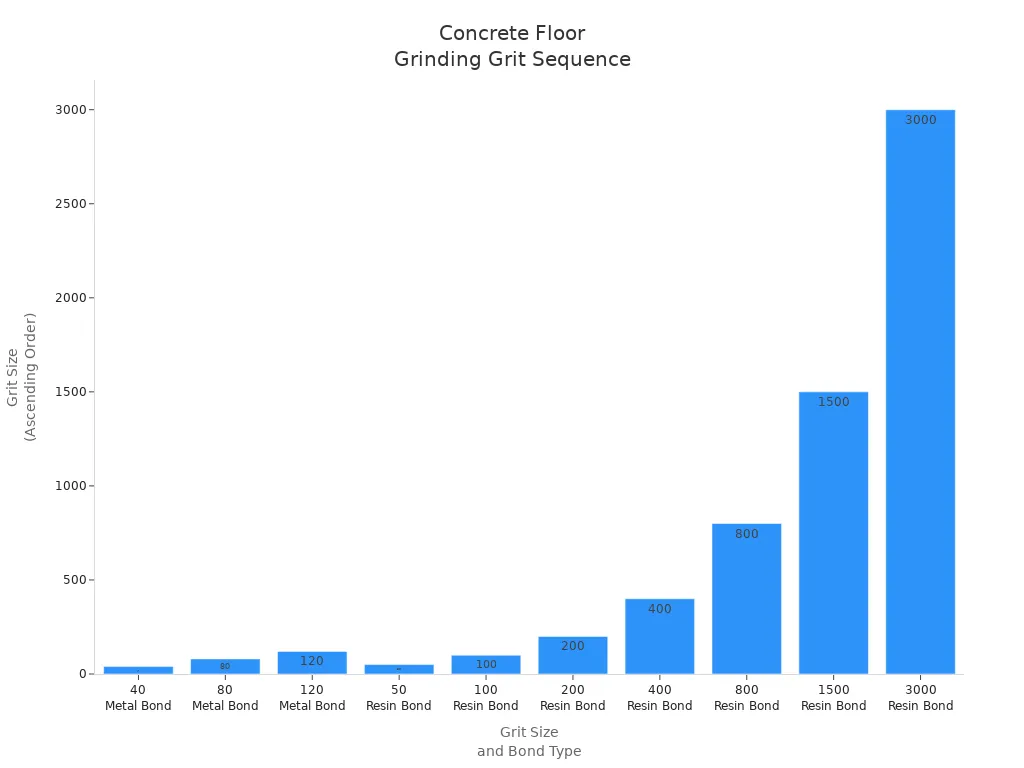
The grinding process makes your polished concrete stronger by preparing it for sealing. A good grind removes problems and helps the sealer stick well, which is important for lasting durability.
Applying Densifier
After grinding, it’s time to use the BANDě Polished Concrete Densifier. This product is very important in the polishing process. Here’s how to use it:
Timing is Key: Apply the densifier after the concrete has cured for at least 28 days. This makes sure the concrete is strong enough and lets the densifier work well with the calcium hydroxide formed during curing.
Application Method: Pour the densifier on the surface and use a plastic broom to spread it evenly. Let it soak in for about 40-60 minutes. After this, remove any extra material and make sure it’s spread evenly.
Final Polishing: Once the densifier has set, you can move on to the final polishing steps. This will make your polished concrete floors shinier and more durable.
By following these steps, you’ll have beautifully polished concrete floors that not only look great but also last a long time.
Maintenance for Polished Concrete Floors
To keep your polished concrete floors looking nice, you need to take care of them regularly. With the right care, they can stay shiny and beautiful for a long time. Here are some tips to help you keep your floors in good shape.
Cleaning Tips
Cleaning polished concrete floors is easy if you follow a simple plan. Here’s what you can do:
Daily Cleaning Routine: Every day, use a dry microfiber mop or a soft broom to sweep away dust and dirt. This helps stop scratches and keeps your floors looking new.
Weekly Wet Mopping: Once a week, use a wet mop with a pH-neutral cleaner. This will clean off grime and keep your floors nice without hurting the finish.
Monthly or Periodic Deep-Cleaning: Every few months, do a deep clean with a commercial-grade auto-scrubber or high-speed burnisher. This will help polish the surface and make it shine more.
You might ask, how often should you clean polished concrete floors? Here’s a quick table to help you:
Frequency | Task | Tools Needed |
|---|---|---|
Weekly | Microfiber mop, pH-neutral cleaner | |
Monthly | Deep cleaning, Conditioner application | Auto-scrubber or mop, Concrete conditioner |
Waxing for Shine
Regular waxing is important for keeping the shine on your polished concrete floors. Waxing not only makes them shinier but also adds a layer of protection against stains and wear. Here’s why waxing is a good idea:
Protection: Wax helps block spills and stains. It stops damage from everyday use.
Enhanced Shine: Good wax can make your floors look even shinier. It reflects light well, giving your space a polished look.
Ease of Cleaning: Waxed floors are easier to clean. The smooth surface lets dirt and grime wipe away easily.
To keep your floors looking great, try to apply wax every 3 to 6 months, depending on how much foot traffic there is. This will help keep that beautiful shine and protect your polished concrete.
By following these maintenance tips, you can make sure your polished concrete floors stay clean and shiny, making your space look better for years.
Common Mistakes When Polishing Concrete
When you polish concrete floors, avoiding mistakes can save you time and help you get a great finish. Let’s look at some common errors and how to avoid them.
Skipping Preparation
Preparation is very important for polished concrete floors. If you skip this step, you might get poor finishes with visible flaws. You could have uneven looks because of polishing dirty concrete. This can cause uneven wear and higher costs later. To avoid these problems, fix cracks and clean up debris before you start. Rushing or skipping cleaning can lead to needing to redo your work. So, take your time to prepare the surface well.
Incorrect Tool Use
Using the wrong tools can hurt the quality of your polished concrete floors. Wrong tool use might cause scratches and flaws, making them less durable. For example, using the wrong diamond tool can lead to bad cutting. Hard concrete needs soft bonded tools, and soft concrete needs hard ones. Also, the tool must match the machine. A tool made for a certain machine weight and speed won’t work well on another machine. Not knowing how to use grinders, buffers, and polishers can damage the concrete. Make sure you pick the right tools and learn how to use them correctly.
Tip: Always test a small area before doing the whole floor. This helps you find any problems early and change your plan if needed.
By avoiding these common mistakes, you can get beautiful polished concrete floors that last and are easy to care for. Remember, using good products like BANDě Polished Concrete Densifier can improve the results, keeping your floors clean and shiny for years.
To get shiny and strong polished concrete floors, you need to follow some important steps. First, prepare the surface well. Make sure your concrete is clean and has no dirt. Next, use the right tools, like diamond grinding machines, to get a great finish. Remember to use the BANDě Polished Concrete Densifier; it makes the surface harder and gives it a shiny look.
To keep your floors nice, regular cleaning is very important. Dust every day and use a pH-neutral cleaner for spills to keep them looking good. Resealing is also necessary—do it once a year for homes and every few months for businesses. By doing these things, you can have beautiful and long-lasting polished concrete floors.
FAQ
What is polished concrete?
Polished concrete is a concrete floor that is made shiny by grinding and polishing. This makes the floor strong and nice-looking. Many people choose it for their homes and businesses.
How do I maintain my polished concrete floors?
To keep your polished concrete floors clean, sweep or vacuum often to get rid of dust. Use a damp mop with a cleaner that is not too harsh once a week. This easy cleaning plan helps your floors stay nice and stops scratches.
Can I use any cleaner on polished concrete?
No, don’t use strong chemicals or cleaners that are acidic. They can hurt the shiny finish. Use cleaners that are safe for polished surfaces to clean well without damaging the shine.
How often should I wax my polished concrete floors?
Wax your polished concrete floors every 3 to 6 months. This depends on how many people walk on them. Waxing makes them shinier and protects them from stains and wear.
Is polished concrete suitable for outdoor use?
Polished concrete is mostly used inside, but you can use it outside if you seal it well. Make sure to pick a finish that won’t be slippery when wet to avoid accidents.
See Also
Mastering Concrete Floor Polishing with BANDě Products
Essential Guide to Concrete Sealers for Industrial Floors
Selecting the Ideal Polished Concrete Densifier in 2025
