


Is investing in a liquid concrete densifier truly worth it? While they offer significant benefits, their value depends heavily on your specific project needs and expectations. This blog provides an objective analysis of the pros and cons of lithium silicate concrete densifiers. You can then make an informed decision for your project.
Key Takeaways
Liquid concrete densifiers penetrate deep into floors to increase strength, reduce dust, and protect against heavy traffic.
These treatments do not fix existing cracks or create shiny surfaces without extra polishing and repair work.
Applying a densifier lowers long-term cleaning and repair costs for busy facilities like warehouses and retail stores.
What is a Lithium Silicate Concrete Densifier?
You might wonder what makes a lithium silicate concrete densifier different. These are alkali silicate solutions. Their gelation behavior depends on the ratio of SiO2 to Li2O. Lower ratios mean faster gelation. The resulting insoluble silicate gel acts as a micro-filler. It fills pores in concrete, increasing hardness and impermeability. Compared to sodium and potassium silicates, this type of densifier has lower alkalinity. It also offers higher water resistance and reduces the risk of alkali-silica reaction (ASR). Sodium silicate densifiers react with free lime and moisture. They form calcium silicate hydrate (C-S-H). This improves compressive strength and reduces porosity. Sodium silicates have a larger molecular structure. They act mainly on the surface.
How This Liquid Concrete Densifier Works
A liquid concrete densifier works by penetrating your concrete. It has a lower viscosity. This allows it to go deeply into the concrete substrate. Once inside, it reacts with calcium hydroxide, also known as free lime. This free lime is naturally present in the concrete. The reaction forms an insoluble calcium silicate hydrate (C-S-H) gel. This gel fills the pores and tiny capillaries within the concrete. This process increases the surface density and hardness. Unlike sodium or potassium silicate treatments, this product does not contribute to ASR. This means you get a harder, more resistant surface without the risk of ASR cracking.
Core Functions of Concrete Densifiers
The core functions of concrete densifiers are clear. They harden your concrete, dust-proof it, and increase its abrasion resistance. For example, the Ashford Formula showed a 32% hardness increase within 30 minutes. It fills pores with crystals, increasing surface density. This process locks in dust-causing salts and eliminates dusting. The result is a dense, abrasion-resistant surface. This surface is suitable for heavy machinery and equipment traffic. Lithium silicate offers key advantages over traditional sodium and potassium silicates. It has smaller silicate atoms. This allows the same densifying effect with less liquid and a faster reaction. Its lower pH reduces the chance of bloom. It leaves less residue for you to dispose of. Applying it is a spray-and-leave method. It requires no rinsing. This saves you significant labor time. For instance, applying it to 1,000 square feet takes about 1 hour.
Pros: When Liquid Concrete Densifiers Shine
Enhanced Durability and Surface Protection
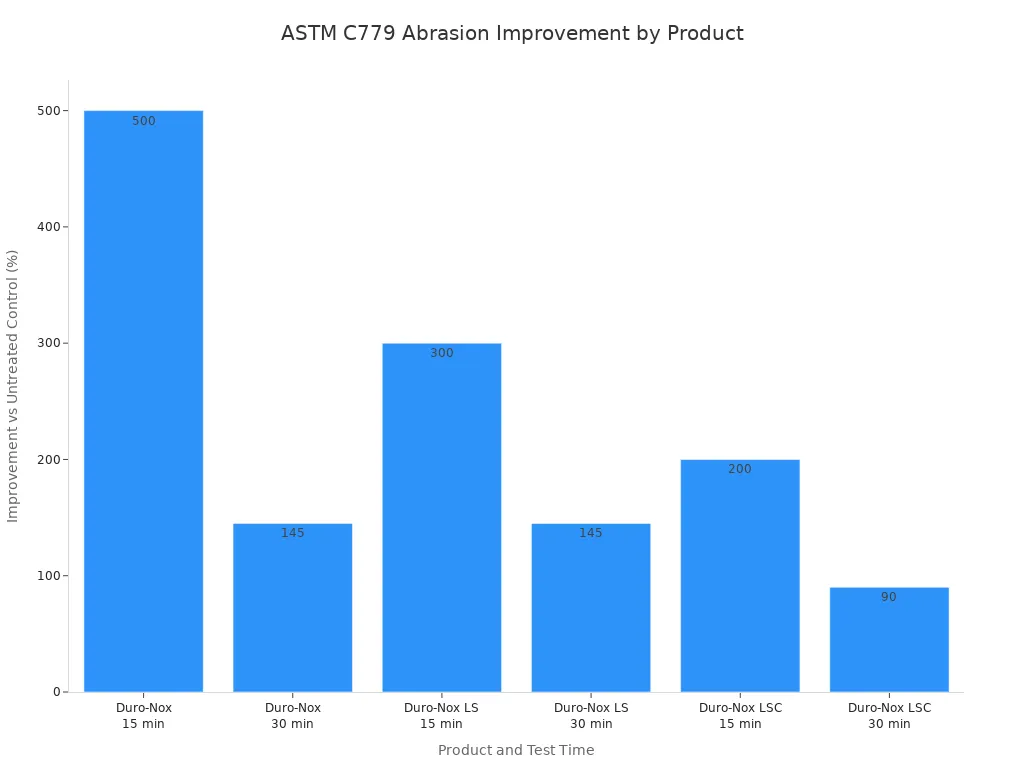
A liquid concrete densifier significantly increases your concrete’s surface strength. This makes it much more resistant to wear, impact, and abrasion. You can expect a substantial improvement in durability. A lithium silicate concrete densifier can increase concrete’s strength and hardness by up to 50%. This makes it the most efficient type of densifier. Independent testing confirms this enhanced resistance. For example, Duro-Nox densifiers showed remarkable improvement in abrasion resistance compared to untreated concrete. ASTM C779 Procedure B, which simulates wheel and caster traffic, demonstrated improvements of up to 500% at 15 minutes for some products. This densifying mechanism forms calcium silicate hydrate gels. These gels fill voids within the concrete. This process increases overall concrete durability, impact resistance, and abrasion resistance.
Beyond strength, these concrete densifiers eliminate concrete dusting. This improves air quality in your facility. It also reduces the need for constant cleaning. A warehouse floor producing dust indicates a surface durability problem. Continual sweeping removes loose particles. However, it does not strengthen the concrete. Dust leads to poor air quality, contaminated inventory, increased equipment maintenance, and additional housekeeping costs. A properly selected penetrating densifier strengthens the surface. It reduces porosity and improves abrasion resistance. This reduces these long-term maintenance-related costs.
Improved Maintenance and Aesthetics
You will find maintenance much easier with densified concrete. The denser, less porous surface improves chemical resistance. It also makes cleaning spills and grime simpler. This leads to lower lifecycle maintenance costs. You get 10–15+ years of densification performance. A 5-year manufacturer warranty makes the treated floor cost-effective over its operational lifetime. A lithium silicate treatment has no surface film to peel or recoat. It outperforms epoxy and acrylic sealers over the life of the floor. One facility manager reported that daily sweeping caused by constant dusting stopped after treatment. This supports reduced housekeeping labor. The lithium densifier is rated low maintenance. It has a permanent life expectancy of 10–15+ years. This compares favorably to 3–5 years for a concrete sealer and 7–10 years for epoxy with recoating.
Aesthetic improvements are also a benefit. Densified concrete can provide a subtle sheen. This is especially true when you polish it. Polished concrete is a mechanical process. It includes adding a densifier and then polishing to your desired gloss level. After applying a liquid concrete densifier, you can polish or burnish a guard or finish coat. This achieves the desired sheen. The final gloss level depends on the polishing stage. You can achieve finishes from flat to highly polished. For example, the INDUROSHINE polishing system with a lithium silicate densifier offers satin, semi-gloss, and high-gloss options. This ensures better concrete performance. It also protects against moisture egress. This safeguards your floor finishes. These long-term cost savings come from reducing the need for frequent repairs and resurfacing.
Cons: When Concrete Densifiers Fall Short
Upfront Costs and Application Challenges
You might find the initial investment in lithium silicate concrete densifiers higher than traditional sodium silicate options. The raw material price of lithium is greater than sodium. For example, premium lithium densifier material alone can cost you between USD 0.15 and USD 0.30 per square foot. If you include an optional final stain-guard treatment, that adds another USD 0.25 to USD 0.50 per square foot. For a 2,000 square foot area, the combined chemical costs could range from USD 800 to USD 1,600. When you consider the application, the labor for applying a lithium silicate densifier typically falls between USD 1.50 and USD 3.00 per square foot, which often includes equipment expenses. This cost is usually part of the overall polishing rate, not a separate line item.
Before you can apply concrete densifier, you must prepare the surface. This preparation adds to your labor. The concrete surface must be clean and structurally sound. You cannot have standing water or a frozen surface. It must also be free of un-neutralized acid stains, curing compounds, release agents, and other contaminants. If a sealer, paint, or grease is present, the liquid densifier cannot soak in enough to react with the free lime. It will remain on the surface, and the chemical reaction will not occur. You must physically remove these coatings before application. While the densifier application itself is a single step with no scrubbing or flushing, the necessary pre-application cleaning requires effort.
Limitations and Misconceptions
It is important to understand what concrete densifiers do not do. They do not fill or repair existing cracks, pop-outs, or significant surface damage. Any cracks or damage in your concrete must be repaired before you apply a lithium silicate densifier. While some products can fill many small voids and pinholes when used with a slurry, they are not solutions for large cracks or general surface deterioration. The chemical change from densification is permanent, but it is limited to the depth treated. If you later grind the floor past this densified zone, you will remove the treated layer, and you may need to re-treat the concrete.
You should also manage your expectations regarding aesthetics. A liquid concrete densifier provides minimal visual change on its own. You will only see a noticeable sheen or aesthetic improvement if you follow the densifier application with polishing. Without polishing, the visual impact is subtle. Be aware of application sensitivity. Improper application can lead to issues like streaking, uneven results, or a white haze if you apply the product too heavily. This requires careful attention during the application process. Finally, while densifiers reduce porosity, they do not make concrete fully waterproof. Silicate densifiers, including lithium-based ones, offer lower chemical resistance compared to dedicated concrete sealers or epoxy coatings. For environments with significant chemical exposure, you might find epoxy coatings a more appropriate treatment.
Is a Liquid Concrete Densifier Right for You?
Key Project Considerations
You must carefully consider several factors to determine if a liquid concrete densifier is the right choice for your project. Think about the type of concrete you have. Is it a new concrete surface or an old concrete surface? Consider its porosity and density. Your intended use and the expected traffic levels are also crucial. For instance, industrial spaces like warehouses and distribution centers experience heavy-duty traffic. They benefit greatly from lithium densifiers. These products penetrate 2–5 mm, reaching Mohs 7–9 hardness. This means they rarely need reapplication. Retail stores, food processing plants, and automotive shops also see high foot or vehicle traffic. They benefit from a one-coat lithium application, fast curing, and minimal residue. This makes polishing easier. For general traffic-bearing surfaces, lithium’s small molecules aid penetration. This makes liquid silicate a cost-effective way to increase abrasion resistance.
You should also consider your budget and long-term maintenance goals. Densifiers offer a cost-effective way to increase concrete strength, density, abrasion resistance, and longevity. This is especially true for high-footfall areas. Densifiers reduce concrete porosity. This helps resist water penetration and fracture formation. This lowers long-term maintenance expenses. For small retail or light-use areas under 1,000 square feet, you can DIY-apply a spray densifier. This saves labor expense. However, warehouses and industrial areas over 1,000 square feet usually require professional installation. This includes mechanical grinding or shot blasting and moisture testing. Professional crews manage large areas faster. This reduces facility downtime. They also provide warranty and accountability. Densifying and refinishing dusting concrete is more affordable than full slab replacement.
Matching Densifier Benefits to Your Needs
You must define your desired outcome as the first selection criterion. Do you want to increase surface hardness, reduce dusting, enhance abrasion resistance, or improve overall durability? Lithium silicate densifiers are the indicated choice when you want a harder, abrasion-resistant, dustproof surface. Their smaller particles penetrate deeper into dense concrete. They react with calcium hydroxide to form calcium silicate hydrate (CSH) crystals. This hardness and abrasion resistance makes lithium silicate densifiers especially suitable for polished concrete projects. These projects require a smooth, durable finish. For example, the INDUROSHINE polished concrete flooring system combines grinding and polishing with LIQUI-HARD. This produces a dense, wear-resistant, architecturally pleasing, low-maintenance floor.
Construction professionals evaluate densification needs based on several criteria. They look for lifecycle cost reduction and lower total cost of ownership. They also consider specification compliance and compatibility with existing slabs. Reduced dusting and improved gloss retention are important. Abrasion and wear resistance under forklift traffic, pallet drag, and frequent cleaning are key. Pore filling reduces absorbency, improves stain resistance, and simplifies cleaning. Professionals also assess durability, hygiene, and aesthetic consistency. They can evaluate finished concrete using ASTM D523 specular gloss measurement. They also use DOI/haze meters. These tools help judge surface refinement. This helps them decide if densification and polishing are needed.
A liquid concrete densifier is a valuable investment. It enhances durability, reduces dusting, and improves longevity in high-traffic settings. However, it is not a universal fix. It will not repair cracks. For waterproofing, consider siliconate sealers. For aesthetic changes, you need polishing or topical coatings on the surface. Evaluate your needs against pros and cons.
FAQ
Does a liquid concrete densifier provide a shiny finish?
A liquid concrete densifier offers minimal visual change on its own. You will only see a noticeable sheen if you follow the application with polishing.
Can a concrete densifier repair existing damage?
No, a concrete densifier does not repair existing cracks or significant surface damage. You must address these issues before you apply the product.
Are concrete densifiers a good choice for high-traffic areas?
Yes, concrete densifiers are excellent for high-traffic areas. They significantly increase surface strength and abrasion resistance, making your floor more durable.
See Also
Understanding Concrete Densifiers And The Secrets Behind How They Function
How Lithium Densifiers Revitalize And Dramatically Strengthen Unfinished Concrete Surfaces
Selecting The Perfect Concrete Densifier Solution For Your Industrial Warehouse
The Complete Ultimate Guide To Understanding BANDe Concrete Densifier Technology
BANDe Shares The Best Polished Concrete Densifier Choices For 2025
