

A concrete floor hardener is an essential treatment for enhancing concrete surfaces. Its main purpose is to strengthen, densify, and protect the surface of a concrete floor. This hardener makes the concrete more resistant to wear, abrasion, and chemical attack. Ultimately, these hardeners play a critical role in extending the lifespan of concrete floors in various environments.
Key Takeaways
Concrete floor hardeners make floors stronger. They protect against wear, scratches, and chemicals. This helps floors last much longer.
Hardeners stop concrete floors from creating dust. They also make floors easier to clean. This saves money on upkeep.
You can use different types of hardeners for new or old concrete. They work by making the concrete surface harder and denser.
Why Concrete Floor Hardeners Are Essential
Enhancing Durability and Longevity
Concrete floor hardeners significantly boost the life of a concrete surface. These treatments chemically react with the concrete, sealing its pores. This process greatly enhances abrasion and impact resistance. For instance, dry shake hardeners integrate into the surface layer of fresh concrete. This creates a dense, wear-resistant topcoat. Liquid hardeners work differently; they penetrate cured concrete and react with natural lime. This reaction forms a hard, solid material within the concrete’s pores. This action increases compressive strength and abrasion resistance. It also reduces the permeability of the concrete, strengthening the bond between the surface and the substrate. Ultimately, a concrete floor hardener creates a durable, wear-resistant surface. This surface resists impact, temperature fluctuations, and freeze-thaw cycles. It also becomes resistant to oil, grease, liquid infiltration, and harmful chemical agents.
Preventing Dusting and Abrasion
Untreated concrete floors often suffer from dusting. This happens because of factors like under-strength concrete or weak surface strength from construction issues. These problems lead to excessive and early wear. Concrete floor hardeners offer an effective flooring solution to this common issue. Liquid hardeners, often clear blends of silicate and siliconate polymers, harden the surface. This increases durability and abrasion resistance. Products like Sikafloor® CureHard-24, a sodium silicate-based liquid, cure, harden, and seal the concrete. They significantly improve both chemical and abrasion resistance compared to untreated concrete. This hardening process seals dust, effectively preventing dust generation and reducing dusting on both new and old concrete.
Improving Chemical Resistance
Concrete floors in industrial settings often face exposure to various chemicals. Hardeners play a crucial role in protecting these surfaces. By reducing the porosity of the concrete, hardeners decrease the absorption of oil, grease, and other chemical substances. This protection prevents potential damage from spills and chemical attacks. The treated concrete surface becomes much more resilient against corrosive agents.
Reducing Maintenance Costs
Investing in concrete hardeners leads to lower maintenance costs over time. A harder, denser concrete floor resists wear and tear more effectively. This means less need for frequent repairs or resurfacing. The improved cleanability of a hardened surface also reduces the time and resources spent on daily upkeep. This makes hardeners a smart choice for long-term savings.
Key Applications and How They Work
Common Uses for Concrete Floor Hardener
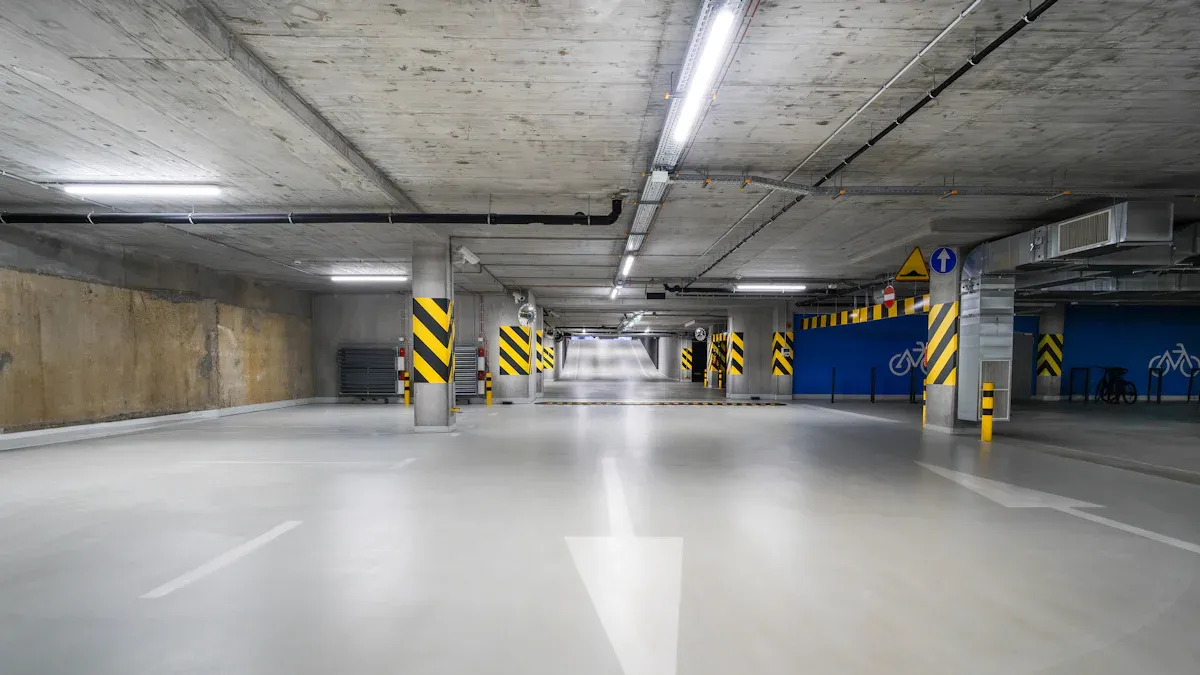
Concrete floor hardeners are vital in many settings. You often find them in manufacturing rooms, distribution centers, and warehouses. Companies that build and fix small and large machines also use them. They are perfect for refrigerated rooms and both indoor and outdoor parking lots. These hardeners are great for factory floors and other places needing a super strong surface. They also prepare concrete for polishing, creating a durable base for polished concrete. For decorative concrete, applying a hardener before staining helps the color last longer and look better.
The Science Behind Concrete Hardening
Liquid chemical densifiers work wonders on concrete. These densifiers, like lithium, sodium, and potassium silicates, react with the portland cement and calcium hydroxide in the concrete. This reaction creates tiny crystals. These crystals fill the empty pores, making the surface much harder and denser. For example, lithium silicate reacts with calcium hydroxide to form strong, insoluble structures. This increases density and resistance. It also blocks micropores and reduces how much moisture the concrete absorbs. This process makes the concrete floor incredibly strong and durable.
Surface Preparation for Optimal Performance
Proper preparation is key for any concrete floor hardener to work its best. First, let the concrete sit after screeding and bull floating. This allows bleed water to come to the surface. Next, remove this bleed water. You can use a rubber hose dragged in a loop or just let it evaporate. Never apply hardener into bleeding water. If you are using a harsh or low slump concrete mix, do not wait. Float the concrete right away with a wood float or bull float. This opens the surface before you apply the hardener.
Types of Floor Hardening Materials in 2025
Many different types of floor hardening materials exist today. Each type offers unique benefits for various applications. Understanding these options helps you choose the best solution for your concrete floor.
Liquid Chemical Concrete Densifiers and Hardeners
Liquid chemical concrete densifiers and hardeners are popular choices. These products penetrate existing concrete. They create a denser, harder surface. Silicate formulations, like sodium, potassium, and lithium silicates, are common. They react with the calcium hydroxide in the concrete. This reaction forms a permanent, crystalline structure within the pores.
Lithium silicate densifiers are a newer, advanced option. They use nano-sized technology and waterborne colloidal silica. This allows the solution to penetrate much deeper into the concrete. The result is a more effective and consistent treatment. BANDě Crystal Floor Hardener is an example of a high-performance liquid chemical hardener. It offers deep penetration and long-lasting densification.
Here is how lithium silicate compares to older silicate types:
Feature | Lithium Silicate | Sodium/Potassium Silicate |
|---|---|---|
Molecular Size | Small | Much larger |
Penetration | Evenly penetrates tight finishes (steel troweled, burnished, broom, float) | Difficult to evenly penetrate tighter finishes |
Reaction Consistency | Evenly reacts, filling all empty pores without inconsistencies or weak points | Reacts inconsistently, leaving weak spots that can deteriorate and dust |
Water Solubility | Less water-soluble | More water-soluble |
Alkali Silica Reactivity (ASR) | Significantly reduces or prevents ASR by not contributing sodium or potassium | Can contribute to ASR |
Lithium silicate’s smaller molecular size allows it to penetrate more evenly. It fills all empty pores without leaving weak spots. This makes the concrete floor much stronger and more uniform.
Dry Shake Hardeners for New Concrete
Dry shake hardeners are powder-form materials. Workers apply them to wet concrete surfaces. These materials enhance durability. They also offer customizable finishes for both performance and aesthetics. A dry shake hardener creates a tough, abrasion-resistant surface layer.
Applying a dry shake hardener involves several steps:
Pour concrete to the standard level. A concrete slump of 10-15 cm is suitable.
Sprinkle TPI M99 over the entire area. Then, trowel with a triangular trowel. This ensures even and smooth dispersion.
Wait for the concrete to become damp. This usually takes 2-3 hours, depending on the weather. The hardener powder absorbs water. Spin the surface with a trowel or polish with a machine. This spreads the M99 mortar uniformly.
Once the M99 mortar sets, finish the surface. Use a trowel or polishing machine. Follow the desired polishing method.
Metallic and Quartz Sand Hardeners
Other floor hardening materials include metallic and quartz sand hardeners. Metallic floor hardeners, like Ferrostrong, provide excellent corrosion resistance. They are ideal for areas needing extra protection against rust and impact. Quartz sand or strong cement hardeners, such as Chemstrong, offer added strength. These materials create a very durable surface. They are perfect for heavy-duty industrial floors.
Epoxy Coatings for Enhanced Concrete Durability
Epoxy coatings are not strictly concrete densifiers and hardeners. However, they provide exceptional adhesion and impressive compressive strength. This makes them common in industrial settings. Warehouses often use epoxy for robust protection. An epoxy coating creates a seamless, non-porous surface. This surface resists chemicals, abrasions, and impacts.
Many types of epoxy exist. Each epoxy offers different properties. For example, some epoxy systems are more flexible. Others are extremely rigid. A polyurethane coating is another option for enhanced concrete durability. While an epoxy provides a hard, protective layer, a polyurethane coating offers more flexibility and UV resistance. Both epoxy and polyurethane systems protect the concrete floor. They extend its life and reduce maintenance needs. These types of hardening materials are crucial for high-traffic areas.
A concrete floor hardener plays an indispensable role in modern construction. It offers a vital flooring solution, enhancing durability, reducing maintenance, and improving aesthetics for any concrete floor. Choosing the right hardener for your specific project ensures long-term performance. Investing in a quality product is a strategic decision for lasting value.
FAQ
What is the main benefit of using a concrete floor hardener?
Hardeners make concrete floors much stronger. They resist wear, abrasion, and chemicals. This extends the floor’s life significantly.
Can you use concrete hardeners on old concrete?
Yes, you can. Liquid chemical hardeners penetrate cured concrete. They densify and strengthen older surfaces effectively.
How long does a concrete hardener last?
A quality concrete hardener provides long-lasting protection. It becomes a permanent part of the concrete. This means it does not wear off or delaminate.
See Also
Understanding Concrete Floor Hardeners: Their Nature and Operational Mechanics
The Definitive 2025 Handbook for Choosing Optimal Concrete Floor Hardeners
Unveiling the Operational Principles of Concrete Surface Hardening Agents
Selecting Excellence: The Five Premier Industrial Concrete Floor Hardeners
Guiding Your Selection: Optimal Concrete Densifiers for Warehouse Floors
